Contact 
Pete Dye Golf Community, Palm Beach Gardens
Approximately 60 homes on 456 Audubon-certified acres in Palm Beach Gardens. Pete Dye designed the course in 1987. Lots range from a quarter-acre to 1.3 acres, with a median around half an acre.
Market Intelligence
Closed sales in the selected window, grouped by price tier.
Data as of July 28, 2026 · Updated daily from Beaches MLS
Closed sales, Beaches MLS. Tiers with fewer than three sales show counts only.
The Community
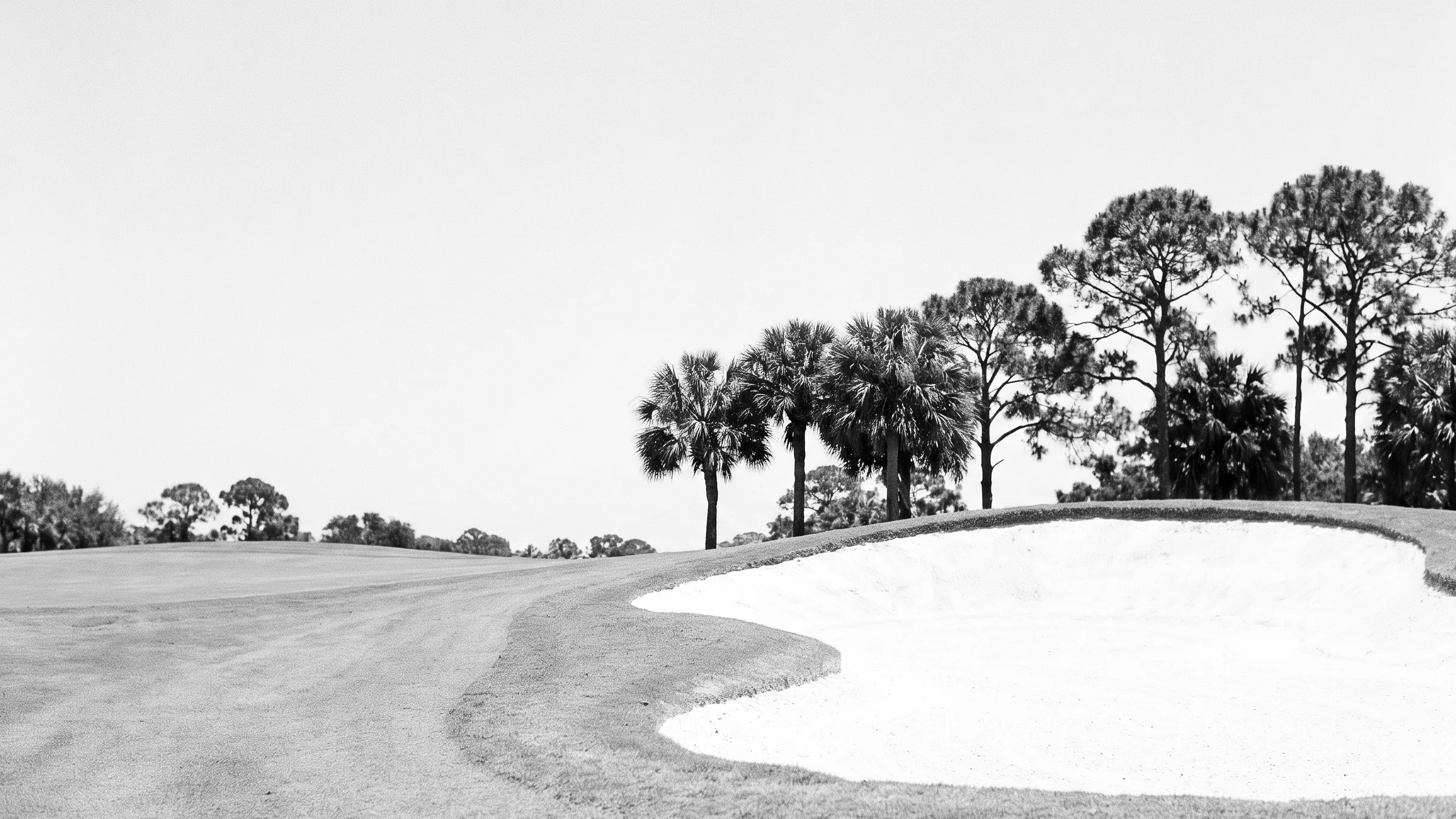
Old Marsh Golf Club is an intensely private, golf-purist community in Palm Beach Gardens, built around a Pete Dye course on hundreds of acres of Audubon-certified land. With only a small number of homes and a minimal social calendar, it is a club for those who come almost entirely for the golf.
Two things define the club. The first is its course and its conservation ethic. The Pete Dye layout sits within an Audubon-certified sanctuary, and the natural landscape is protected and integral to the experience. The second is its privacy and restraint. Old Marsh is deliberately small, low-density, and golf-focused, with little of the amenity sprawl of larger communities, which is exactly its appeal.
| Setting | Private golf club on Audubon-certified land in Palm Beach Gardens |
|---|---|
| Total Homes | ~60 |
| Lot Range | 0.25 to 1.3 Acres |
| Golf | A Pete Dye course |
| Membership | Equity, golf-focused |
| How It Trades | Very limited supply, golf-driven, closely held |
Old Marsh was built around a single Pete Dye course on hundreds of acres of preserved wetland and native habitat, certified as an Audubon sanctuary. The community was kept deliberately small and golf-focused, with the natural landscape protected as part of the design. It is a club for those who value the game and the setting over amenity breadth.
With only about sixty homes spread across so much protected land, the club runs on a scale that has almost no parallel in Palm Beach County, where most golf communities count their residences in the hundreds or thousands. The membership is small and largely known to one another, and the club deliberately forgoes the social sprawl, packed event calendars, and resort amenities that define larger clubs nearby. What replaces all of that is space, quiet, and easy access to the course, and for the kind of member Old Marsh attracts, that restraint is precisely the luxury they are buying.
The Pete Dye course is the community’s centerpiece, routed through protected marsh and native vegetation that the club maintains as a sanctuary. The conservation ethic is integral, not incidental, and it fixes a permanent limit on development. Golf and the natural setting are the entire point.
A Pete Dye routing rewards precision and thoughtful play rather than raw length, and threaded through wetland and native grasses it presents the kind of shot-making challenge that rewards serious golfers round after round. Because the surrounding land is held as an Audubon-certified sanctuary, the corridors of marsh and native habitat between holes are permanent, which gives the course a sense of seclusion that newer, tightly platted communities cannot replicate. The same protection that shapes the golf also caps how much can ever be built here, so the low density and the natural buffers are effectively locked in for the long term, and that permanence is a real part of what ownership secures.
With only a small number of residences, homes sit privately within the preserve, set among the course and native landscape on generous lots. The architecture is understated and oriented to the golf and the marsh. Low density defines both the character and the value of the community.
Lots run from roughly a quarter acre to well over an acre, and the generous spacing means most homes look out onto golf, water, or preserve rather than onto one another. The prevailing architecture is restrained and tailored to the setting, favoring a settled, low-key presence over showy scale, which suits owners who value privacy and the natural surroundings above display. Because the community can never grow beyond its small footprint, each home is effectively one of a fixed and very limited set, and that scarcity, paired with the protected land around it, is central to how the property holds its standing over time.
With a very limited number of homes, Old Marsh is one of the more closely held golf markets in the area, and availability depends entirely on the small membership. The finest course and preserve positions move quietly. Understanding the club means knowing its homes individually and tracking ownership ahead of any sale.

Side by side
Market data is pulled live from the MLS on a trailing twelve-month basis, across all property types. Community details below are reference.
View All Private Clubs →Common Questions
As of early 2026, Old Marsh trades across three broad tiers. Two original club cottages on Old Marsh Road (roughly 1,800 SF, 2BR) sit at the entry end of the community. The core estate market is 3,000 to 5,500 SF homes on quarter-acre to half-acre lots, with renovation status and position driving where a home lands in the range. Renovated or newer-construction estates of 4,500 to 7,500+ SF on larger lots are the top of the market here. For the current average sale price, price per square foot and closing count, see the market table above, which reads live from the MLS.
HOA fees vary by property size and lot. Initiation has more than doubled since 2020, with step increases in 2022, 2023, and 2025, so confirm the current figure with the club. This trajectory reflects ongoing capital investment in the course and facilities. Annual dues and current assessment levels should be confirmed directly with the club before making an offer.
More frequently than the community’s reputation suggests. Old Marsh turns over steadily for a community of approximately 60 homes; the market table above carries the current closing counts, read live from the MLS. That is a relatively high turnover rate for a private club of this size. Volume peaked in 2020 and 2021, dipped in 2024, then rebounded in 2025. Some transactions occur off-market through member introductions, so the true pace may be slightly higher. At any given time, zero to three homes are typically listed publicly.
Significantly. Average price per square foot has more than doubled since 2020. Post-2022 volume has been substantial relative to the size of the community. However, appreciation has not been uniform. The community record sale, set on Brynwood in 2023, resold at a loss in late 2025, a reminder that the very top of the range is thin. Mid-market estates have shown more consistent gains, with repeat sales on Old Marsh Road stepping up materially at each trade between 2021 and 2025.
Pete Dye designed the course in 1987, during the period widely considered his creative peak. The layout features his signature railroad ties, strategic bunkering, and wetland carries integrated into the surrounding Audubon-certified habitat. The natural marsh that borders most holes gives the routing a character distinct from Nicklaus-designed communities like Bears Club or Loxahatchee, where the course sits within a more manicured residential envelope.
Both are among the smallest golf communities in Palm Beach County, with roughly 50 to 60 homes each. Bears Club (Nicklaus design, 2000) trades at a substantially higher ceiling and has drawn a higher-profile membership. Old Marsh sits well below it at both ends of the range. The practical difference for most buyers is course philosophy (Dye’s strategic, wetland-integrated design vs. Nicklaus’s more sculptured residential layout), price band, and the character of the natural surroundings.
Loxahatchee Club (Nicklaus, 1985) is a considerably larger community. Loxahatchee offers a wider price range and more frequent inventory turnover. Old Marsh’s smaller scale produces less competition for tee times but also less liquidity on resale, with a far shallower pool of listings than Loxahatchee. Loxahatchee also offers more product variety, including smaller homes that Old Marsh does not have outside of two original cottages.
Three distinct types, detailed with pricing in the cost question above. The original club cottages on Old Marsh Road (1988, approximately 1,800 SF) are the lowest entry point. The core estate inventory spans the community’s main streets, built between 1989 and 2006. Larger estates and compounds, including newer construction through 2024, concentrate on Brynwood and Hammock. The community’s eight streets each have a slightly different character: Brynwood and Hammock tend toward larger lots and compounds, Sabal Chase and Oakmeade carry the bulk of the mid-market inventory, and the Marsh and Marsh Landing addresses sit along the course’s interior corridors.
A significant portion of Old Marsh’s housing stock was built before the 2002 Florida Building Code overhaul. Homes from that era may face higher wind insurance premiums and more limited carrier options. Roof age over 15 years further constrains insurability and pricing. This matters most at the lower end of the community, where unrenovated 1990s-era homes may require roof replacement before a buyer can secure affordable coverage. Buyers should obtain insurance quotes before going under contract.
Florida has no state income tax. The homestead exemption reduces assessed value by up to $50,000 for primary residents, and the Save Our Homes cap limits annual assessment increases to 3%. At Old Marsh price points, the gap between a homesteaded owner’s assessed value and current market value can grow to seven figures within a few years of ownership. Seasonal buyers without homestead face full market-value reassessment annually, which on an Old Marsh estate can produce an annual tax bill tens of thousands of dollars higher than what the prior homesteaded owner was paying.
Old Marsh restricts or prohibits leasing. Buyer approval and interview requirements apply to any transfer of occupancy, not just sales. Seasonal buyers who plan to lease their home when not in residence should confirm the current rental policy with the club before going under contract.
Old Marsh is zoned for Marsh Pointe Elementary, Watson B. Duncan Middle, and William T. Dwyer High School, all within the Palm Beach County School District. For families considering Old Marsh alongside communities further south in Palm Beach Gardens or north in Jupiter, school zoning can differ meaningfully. Dwyer High is one of the larger public high schools in the northern part of the county. Private school options in the area include Benjamin School in North Palm Beach and Jupiter Christian School.
We'd welcome the conversation.