 Contact Contact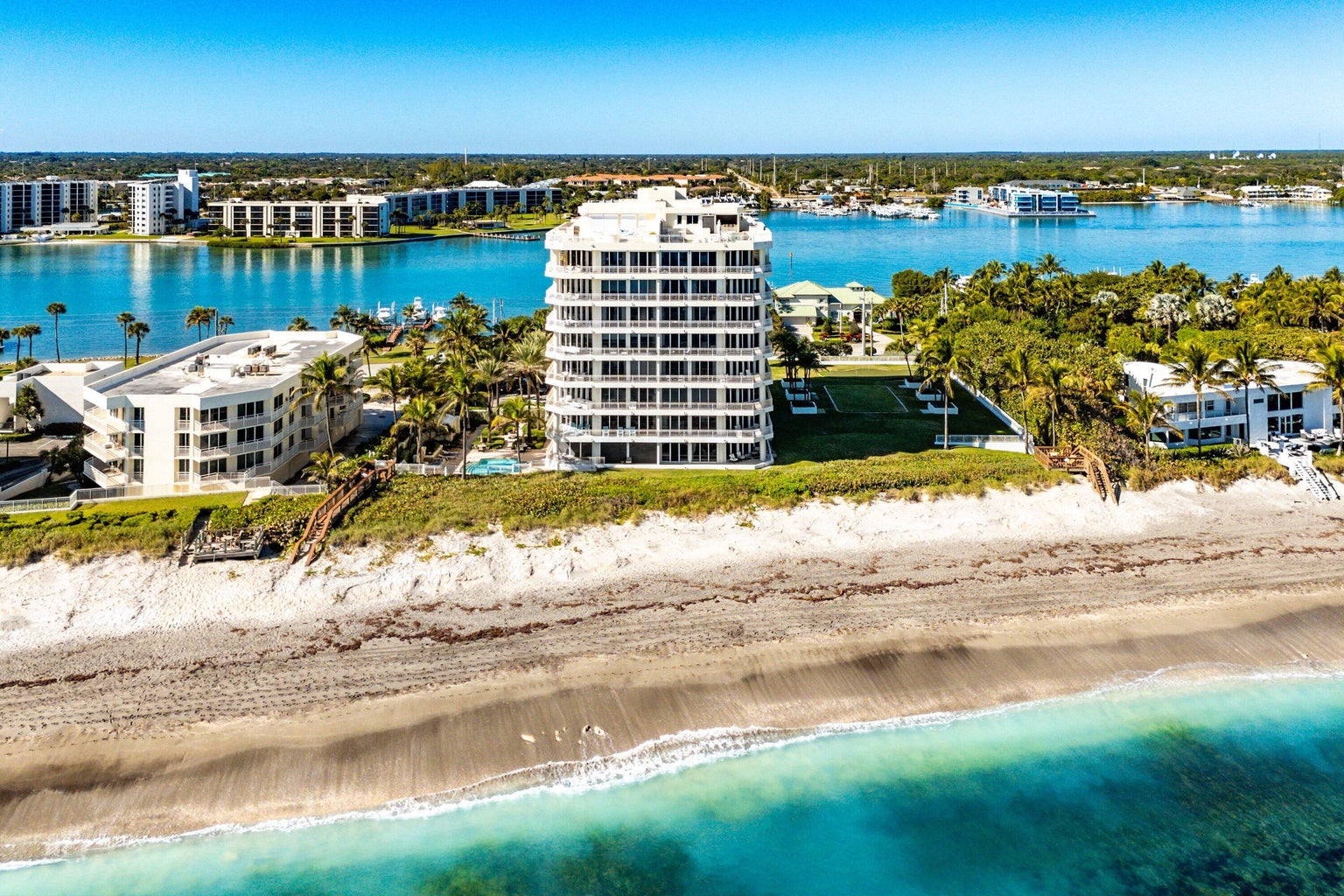
Jupiter Island Oceanfront
15 oceanfront residences at 19950 Beach Road on Jupiter Island, built circa 1985. Flow-through floor plans with Atlantic and Intracoastal exposure.
Market Intelligence
Transaction volume is limited by the building’s 15-unit inventory. The data below reflects structural characteristics rather than current market conditions.
About The Building
The Claridge is a single eight-story oceanfront building at 19950 Beach Road, housing 15 residences at the northern end of Jupiter Island near the Palm Beach County line. Built circa 1985, it is one of only two condominium buildings on the island, the other being SeaGlass, completed in 2022.
Each residence spans approximately 3,500 square feet with three bedrooms and four-and-a-half to five bathrooms. Flow-through floor plans provide Atlantic Ocean views to the east and Intracoastal Waterway views to the west. Two air-conditioned garage spaces are included per unit. On an island dominated by single-family estates, the building offers oceanfront ownership without the land maintenance, staffing, and carrying costs of a private compound.
Building services include a manned gate, 24-hour concierge, security patrol, on-site management, a swimming pool and whirlpool, exercise room, community room, and direct private beach access. Boat dock availability can be confirmed with building management.
The Claridge sits at a distinct price tier from SeaGlass, where residences have traded from approximately $9 million and up. Claridge units have historically traded in the range of $2.9 million to $6 million, making it the lower entry point for Jupiter Island oceanfront condominium ownership. The trade-off comes down to building age and cost basis: SeaGlass delivers new construction finishes and a modern building envelope; The Claridge offers larger floor plans at a significantly lower cost basis, with the option to renovate to the owner’s specification.
Building Features
Residence Options
Floors 1–8
Residence Features
Location
The Claridge sits at the northern end of Jupiter Island, near the Palm Beach County line. This section of Beach Road has no commercial development and restricted public access. Jupiter Island maintains its own police force and strict zoning that limits density across the island.
The Village of Tequesta and the Town of Jupiter are a short drive across the Jupiter Inlet, providing grocery, dining, and retail within minutes. Jupiter Inlet offers direct ocean access for boating, and the Loxahatchee River, a federally designated Wild and Scenic waterway, is approximately 10 minutes south.
Common Questions
Claridge residences have historically traded between approximately $2.9 million and $6 million. The spread is driven primarily by floor level and renovation status. An unrenovated lower-floor unit and a fully updated upper-floor unit with open Atlantic sightlines are fundamentally different products, and pricing reflects that.
With only 15 units and infrequent turnover, comparable sales in any given year are limited, so buyers should expect to evaluate each opportunity on its own merits rather than relying on a deep comp set.
These are the only two condominiums on Jupiter Island, and they serve different buyer profiles. SeaGlass (completed 2022, 21 residences, from approximately $9 million) appeals to buyers who want a finished product with current building systems and designer interiors at delivery. The Claridge appeals to buyers willing to renovate in exchange for significantly more space at a lower basis.
At roughly 3,500 square feet per unit and a historical trading range of $2.9M to $6M, a Claridge buyer can acquire and fully renovate a residence for less than SeaGlass entry pricing and end up with a larger floor plan. The trade-off is that The Claridge is a circa-1985 structure, so due diligence on building systems, reserves, and any upcoming capital projects is essential.
Florida’s post-Surfside condominium legislation (SB 4-D and subsequent amendments) requires milestone structural inspections and fully funded reserves for buildings of this age and proximity to the coast. Buyers should request the most recent milestone inspection report, the current reserve study, and the association’s reserve funding schedule as part of purchase due diligence.
These documents are the clearest indicators of whether the building faces significant near-term capital assessments. Our team can obtain these on your behalf before you make an offer.
HOA fees cover 24-hour concierge, gated security, building management, grounds and pool maintenance, and the master insurance policy on common elements and the building structure. The economics of a 15-unit building are worth understanding: full-service staffing (concierge, security, management) is spread across fewer units than in a 50- or 100-unit building, so per-unit assessments are proportionally higher.
The offsetting advantage is direct input into building decisions. In a 15-owner association, every owner has meaningful influence over capital planning, vendor selection, and reserve policy. Current fee schedules are available through our team.
Infrequently. Long-term ownership is the norm, and multiple years can pass between transactions. When a unit does surface, the buyer pool is narrow but motivated: there are only two condominium options on Jupiter Island, and single-family estate alternatives start well above The Claridge’s price range.
For buyers with a specific interest in this building, our Compass Private Exclusives program monitors ownership changes and pre-market activity across all 15 units.
Most updated units have undergone full interior renovations including kitchens, bathrooms, flooring, lighting, and hurricane-impact window upgrades. At approximately 3,500 square feet with natural light from both east and west exposures, the floor plans accommodate a wide range of design approaches.
Renovation scope and budget vary, but buyers should factor $150 to $300+ per square foot for a comprehensive update depending on finish level. Association approval is required for any work affecting common elements or building systems, and construction logistics on Jupiter Island (access, permitting, contractor availability) should be planned accordingly.
Carrying cost and operational complexity. A Jupiter Island estate typically requires a property manager, landscaping crew, pool service, and in many cases dedicated house staff or security. Depending on property size and staffing level, annual operating costs for a staffed oceanfront estate can run $250,000 to $500,000 or more before mortgage, insurance, and property taxes.
At The Claridge, the building association handles exterior maintenance, security, landscaping, pool operations, and common-area insurance. For an owner who wants a Jupiter Island oceanfront address without managing a residential compound, or who uses the property seasonally, the building structure removes that operational burden entirely.
The condominium association governs rental policies, which typically include minimum lease terms and board approval of tenants. Jupiter Island as a whole is oriented toward owner-occupied residential use, and short-term or vacation rental activity is not part of the island’s character.
Buyers evaluating The Claridge primarily as a rental investment should review the association’s current rules carefully, as most Jupiter Island buildings impose restrictions that limit rental frequency and require advance board consent.
Pet policies are set by the condominium association and may include restrictions on breed, size, and number of animals. These rules can change with board votes, so buyers with specific requirements should confirm current policy before making an offer.
Current details are available through our team or directly from building management.
Yes. Like most condominium associations on Jupiter Island and throughout South Florida, The Claridge requires board approval of all purchasers. The process typically involves a formal application, financial documentation, and an interview.
Timeframes and specific requirements vary. Buyers should factor the approval timeline into their closing schedule and be prepared for the association to request background and financial information as part of the review.
The association’s master policy covers the building structure and common elements. Individual owners are responsible for HO-6 (interior, contents, and personal liability) coverage. Florida’s coastal insurance market has tightened significantly in recent years, and premium costs for both master policies and individual HO-6 policies have increased across oceanfront buildings statewide.
Buyers should obtain quotes for HO-6 coverage before closing and review the association’s master policy limits, deductible structure, and any loss assessment provisions. The current master policy premium and its allocation across the 15 units is reflected in HOA fees.
Jupiter Island itself has no commercial development, so daily life involves a short drive off-island for most errands. The Village of Tequesta and the Town of Jupiter are eight to 10 minutes across the Jupiter Inlet and cover grocery, dining, medical, and retail. Blowing Rocks Preserve is five minutes south for walking and nature access.
Jupiter Inlet provides direct ocean access for boating, and the Loxahatchee River is one of only two federally designated Wild and Scenic rivers in South Florida. PBI Airport is approximately 35 minutes south. The tradeoff for Jupiter Island’s privacy is that everything beyond the beach and the building requires getting in a car, but nothing essential is more than 15 minutes away.
15 residences on Jupiter Island’s oceanfront. We track ownership and renovation status across the building. Contact us to discuss current and upcoming availability.
