Lost Tree Village<br>Homes for Sale

Private Beach Club & Golf Community, North Palm Beach

Lost Tree Village
Homes for Sale

A 450-acre private community spanning the barrier island to the Intracoastal Waterway in North Palm Beach. Approximately 570 residences, 1.2 miles of private Atlantic beach, and a Jack Nicklaus Signature golf course. Property Owners Association membership is automatic with purchase. Golf club membership is separate and by invitation only.

~570
Residences
450
Acres
Jack Nicklaus
Course Redesign (2002)
1962
Course Opened
Scroll to Explore

9

Active

$4.5M

Median Price

121

Avg Days on Market

14

Sold YTD

9 properties

12404 Indian Road, North Palm Beach, FL 33408

12404 Indian Road

North Palm Beach, 33408

1155 Lake House Drive, North Palm Beach, FL 33408

1155 Lake House Drive

North Palm Beach, 33408

11354 Golfview Lane, North Palm Beach, FL 33408

11354 Golfview Lane

North Palm Beach, 33408

11354 Old Harbour Road, North Palm Beach, FL 33408

11354 Old Harbour Road

North Palm Beach, 33408

11080 Turtle Beach Road 108, North Palm Beach, FL 33408

11080 Turtle Beach Road 108

North Palm Beach, 33408

11337 Lost Tree Way, North Palm Beach, FL 33408

11337 Lost Tree Way

North Palm Beach, 33408

2 Church Lane 115-116, North Palm Beach, FL 33408

2 Church Lane 115-116

North Palm Beach, 33408

1 Church Lane 105-106, North Palm Beach, FL 33408

1 Church Lane 105-106

North Palm Beach, 33408

1 Church Lane 109-110, North Palm Beach, FL 33408

1 Church Lane 109-110

North Palm Beach, 33408

Lost Tree Village

YOUR SEARCH

Looking in Lost Tree Village?

Tell us your priorities and we will build a curated selection, including off-market opportunities you will not find on any portal.

One conversation. A shortlist built around your priorities. Access to inventory that never goes public.

Get Private Access →

About Lost Tree Village

Lost Tree Village is a 450-acre private beach, golf, and Intracoastal community in North Palm Beach with approximately 570 residences, the only private club in Palm Beach County that combines its own ocean beach club, an 18-hole Jack Nicklaus Signature golf course, and Intracoastal deep-water dockage within a single community. The community spans both sides of US-1: oceanfront homes and the beach club sit on the barrier island, while the golf course and the majority of residences occupy the mainland. The course was originally designed by Mark Mahannah and opened in 1962, then completely redesigned by Jack Nicklaus in 2002.

The housing stock includes oceanfront estates, Intracoastal waterfront homes, Little Lake Worth properties, golf-course estates, golf cottages, club suites, and condominiums. Construction spans six decades, from original 1960s homes to recent builds. Oceanfront and Intracoastal estates range from 5,000 to 18,000+ SF on lots up to 1.4 acres. Interior and golf-course homes range from 2,200 to 7,000 SF. Club suites and cottages, the smallest product type, start around 1,500 SF. This variety creates a wide price band: interior homes from the low $3Ms to waterfront estates that have traded above $90M.

Lost Tree has two separate governance structures. All residents are automatically members of the Lost Tree Village Property Owners Association (POA), which manages the community infrastructure, security, and common areas. The Lost Tree Club is a separate, private equity club offering golf, tennis, beach club, and dining. Golf club membership is by invitation only and requires sponsorship by two existing members who have known the candidate socially. Importantly, you cannot apply for golf club membership until after closing on a Lost Tree residence. Not all residents are golf club members; social memberships with dining and beach access are also available. Membership fees and dues are not published and are shared only with prospective members during the application process.

The community’s age means mature landscaping, an established social fabric, and a membership that has self-selected over six decades. Founding families still reside here. Recent facility investments are substantial: the Beach Club was completed in 2008, the main clubhouse in 2012, and the fitness center in 2013, so the amenity infrastructure is newer than the community itself.

The Beach Club
2008
Beach Club Built

1.2 Miles of Private Atlantic Beach

The Beach Club

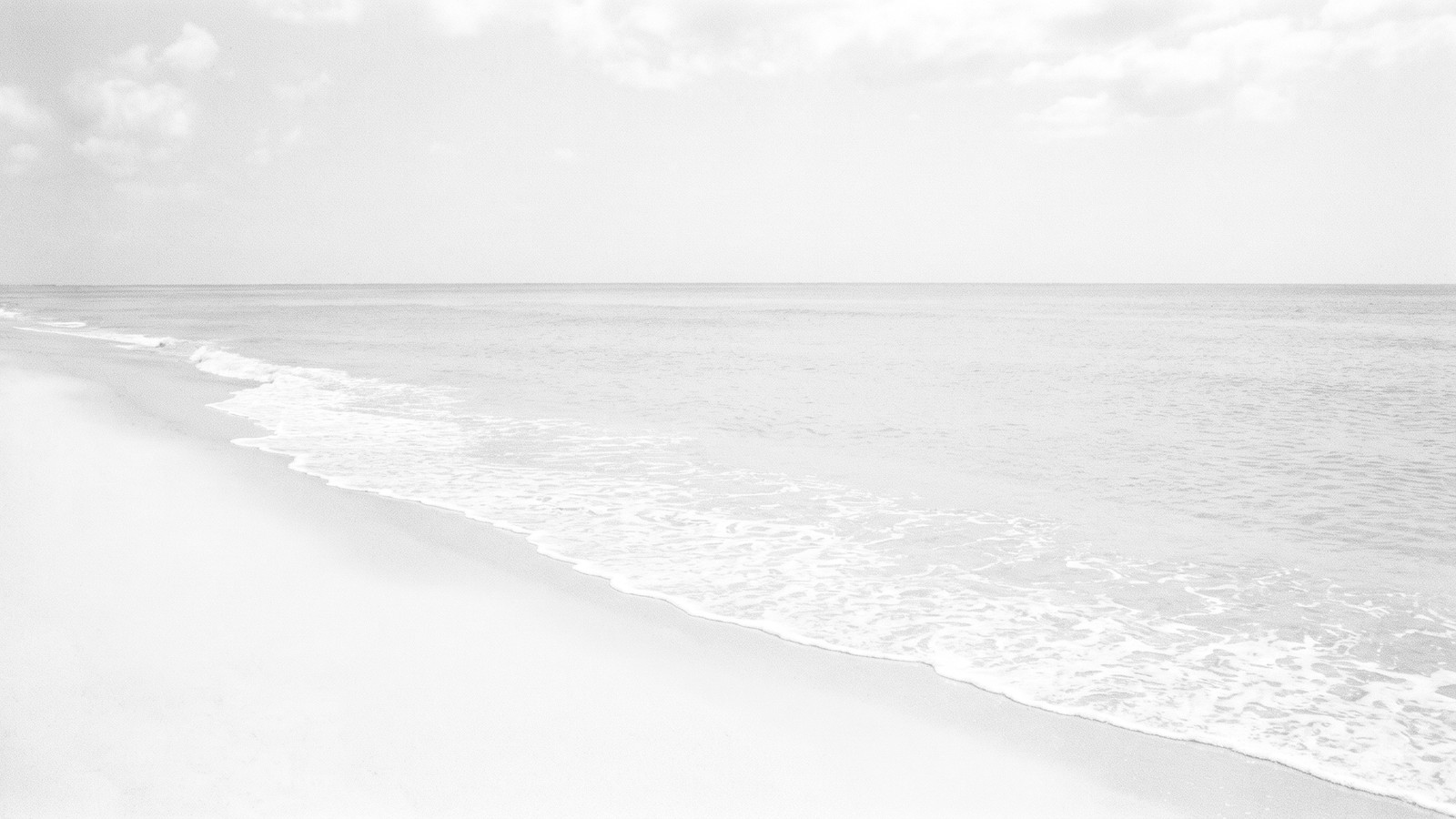
The Lost Tree Beach Club opened in its current form in 2008 and sits on the barrier island with direct Atlantic frontage. Facilities include cabanas, an oceanfront dining room, outdoor bar, pool and spa, and full service staff. Access is through the community, not shared with any public beach. Among the 15 private communities profiled on this site, Lost Tree is the only one with its own ocean beach club.

Beach club access is available to both golf club members and social members. For buyers comparing Lost Tree to inland golf communities like The Bears Club, The Loxahatchee Club, or Old Marsh, the beach club is the primary differentiator. For buyers comparing it to Admirals Cove, the distinction is ocean beach versus marina. Different lifestyle, different buyer.

Explore Oceanfront Properties

No public access, no day passes. Open to Lost Tree club members (golf and social) and their guests.

Members-Only Access

Oceanfront dining room, outdoor bar, heated pool, spa, and private cabana service on the barrier island.

Full-Service Facility

Beach club access is included for both active golf members and social members, not limited to full golf membership.

Golf & Social Members

The Golf Course
Nicklaus
Signature Course

Mark Mahannah (1962), Redesigned by Jack Nicklaus (2002)

The Golf Course

The 18-hole course was originally designed by Mark Mahannah and opened in 1962. In 2002, the course was completely redesigned by Jack Nicklaus and is now a Nicklaus Signature layout. Par 72, 6,849 yards from the back tees. The redesign preserved the mature tree canopy while modernizing greens, bunkers, and the overall routing to Nicklaus standards.

The club has approximately 350 active golf members and 125 social members. Practice facilities were recently renovated to include expanded teeing ground, a double-sided range, two putting greens, and two short game areas, all positioned between the 1st and 10th tees. For buyers whose primary criterion is nationally ranked course pedigree, The Loxahatchee Club and Jupiter Hills carry those distinctions. For buyers who want a Nicklaus course plus ocean access in one community, Lost Tree is the only option in the county.

Explore Golf Community Properties

One of 11 Nicklaus Signature courses in Florida. The 2002 redesign rebuilt every green and bunker while routing around existing banyan and palm canopy.

Nicklaus Signature (2002)

Double-sided range, two putting greens, two short game areas. All positioned between the 1st and 10th tees for convenience.

Renovated Practice Complex

Approximately 350 active golf members with unlimited play, plus 125 social members with limited seasonal access.

~350 Active Golf Members

Real Estate

Current Market
$1,573
Median $/SF Post-2022

19 Closed Sales, 2020 to 2025

Current Market

Lost Tree Village recorded 19 closed sales between 2020 and 2025, totaling approximately $256M in volume. The market breaks into distinct tiers. Interior and golf-course homes traded from $1.8M to $7.3M across 6 sales. Waterfront homes (Intracoastal, Little Lake Worth, and barrier island) ranged from $3.2M to $22M across 11 sales. Two oceanfront estate transactions in 2025 reset the ceiling: $55M for a 2022-built estate on End Road (10,514 SF, 1.4 acres) and $97.5M for a 2013-built estate on Old Harbour (17,865 SF). Post-2022, median $/SF is approximately $1,573 excluding those two outlier transactions.

Turnover is low. The community averaged 3.4 MLS-recorded transactions per year from 2020 to 2024, a turnover rate under 1% of approximately 570 residences. Not all sales appear on the MLS; a portion trade privately. Construction vintage ranges from 1965 to 2022 within the dataset. Buyers at the lower price points should budget for renovation: 15 of 19 recent sales were pre-2000 construction, and the price gap between original-condition and renovated homes in similar locations can exceed $2M.

$1.8M to $7.3M
Interior & Golf Course
  • 2,200 to 7,000 SF
  • Golf-course, lake, or interior views
  • Original (1967 to 1995) or renovated
  • 6 sales 2020 to 2025, avg $3.9M
  • $/SF range: $612 to $1,159
$55M to $97.5M
Oceanfront Compound
  • 10,500 to 17,865 SF
  • Direct Atlantic frontage, 1+ acre lots
  • Post-2010 construction
  • 2 sales in 2025 at $5,200+ per SF
  • 2 of 19 total sales in the 2020 to 2025 dataset

What to Know Before You Buy

Golf club membership is separate and post-closing. This is the single most important structural point buyers misunderstand about Lost Tree. Buying a home gets you into the community (POA membership is automatic), but it does not get you into the club. Golf, beach, tennis, and dining are operated by the Lost Tree Club, a separate entity with its own invitation process. The club does not accept applications from prospective buyers. You close first, then apply with sponsorship from two existing members who know you socially. Social memberships with beach and dining access are also available. Fees and dues are shared only during the application process.

Insurance and construction vintage. Lost Tree’s barrier island homes are in Flood Zone AE/VE, requiring wind and flood insurance. Premiums vary significantly by construction date: homes built before 2002 (pre-Florida Building Code) typically carry higher wind insurance costs and may face underwriting limitations based on roof age. Of the 19 recent sales in our dataset, 15 were pre-2000 construction. Buyers of older homes should obtain insurance quotes before going under contract.

Renovation scope and timeline. Lost Tree employs a staff architect who administers the community’s design guidelines. All exterior modifications and new construction require committee approval, which can add two to four months before permits are pulled. There are no limitations on builder selection, provided the committee approves the plans. Given that many lower-priced homes need substantial work, buyers should factor the approval timeline and carrying costs (POA fees, insurance, taxes) during renovation into their total budget. Lost Tree does not permit short-term rentals.

Assessment and fee structure. As a member-owned equity club, the Lost Tree Club board can levy capital assessments for facility improvements. The community completed three major capital projects between 2008 and 2013, and the practice facility has been renovated more recently. Future assessment exposure and current fee structures should be reviewed directly with the club during the membership process.

Resale dynamics. Fewer than 1% of Lost Tree homes trade in a typical year on the MLS, and a portion of transactions close privately before listing. The incoming buyer must go through the full golf club admissions process (if seeking golf membership) after closing. The club holds no right of first refusal, but the admissions structure functions as a practical filter.

Tax context. Florida has no state income tax. Homestead exemption caps annual assessed value increases at 3% (Save Our Homes), a meaningful benefit on a high-value primary residence. Non-homestead properties (seasonal/second homes) are assessed at full market value annually with no cap. On a $10M+ home, the annual tax difference between homestead and non-homestead status can exceed $50,000.

Membership

Ownership and club membership at Lost Tree are governed by two separate entities. The POA is automatic with any property purchase. The Lost Tree Club requires a separate, post-closing application with member sponsorship. The four steps below outline the sequence.

01

Purchase & POA Membership

Close on a Lost Tree Village property. POA membership is automatic. You gain access to the community, security, and common areas.

02

Club Sponsorship

Two existing Lost Tree Club members who have known you socially sponsor your application. Additional reference letters are required.

03

Committee Review

The membership committee reviews your application and conducts social interviews. The process takes several months.

04

Club Membership

Upon approval, choose between active golf membership (unlimited play) or social membership (dining, beach, limited seasonal golf). Contact us to discuss the process and facilitate introductions.

Amenities

Clubhouse (2012) & Chapel

Completed 2012 in Island Classical style by Peacock & Lewis. Formal and casual dining rooms, private event space, card rooms, and veranda overlooking the golf course. On-site chapel (1978) hosts Sunday services November through May and is available for weddings and baptisms.

Tennis & Pickleball

8 Har-Tru courts located adjacent to the beach club with ocean breezes. Resident men's and ladies' pro. Pickleball courts, basketball court, and shuffleboard also on site.

Fitness Center (2013)

Completed 2013. Nautilus weight machines, group Pilates and spin studio, functional strength and training studio, personal trainers available.

Staffed Gate & Security

Manned gatehouse on US-1 with 24-hour security and roving patrol. Separate barrier island access point for oceanfront residents. Community is gated on both mainland and island.

Location

North Palm Beach, Florida

Location

Lost Tree Village sits on US-1 in North Palm Beach, bordered by Seminole Landing to the north, MacArthur State Park to the south, the Atlantic Ocean to the east, and Little Lake Worth and the Intracoastal Waterway to the west. The community occupies both the barrier island (beach club, oceanfront homes) and the mainland (golf course, majority of residences).

From the main gate: Palm Beach International Airport is approximately 12 minutes south via I-95, with Signature Flight Support and Atlantic Aviation providing FBO services for private aircraft. Worth Avenue and the town of Palm Beach are 20 minutes south. Jupiter's Harbourside Place dining and retail corridor is 15 minutes north.

Beach Club
On Barrier Island
Within Community
PBI Airport (Signature/Atlantic FBO)
Private Aviation
12 min
Worth Avenue, Palm Beach
Shopping & Dining
20 min
Jupiter Medical Center
Level II Trauma Center
12 min

Lost Tree vs. Other Communities

Factor
Lost Tree Village
Primary Draw
Beach + Golf
Golf (Nicklaus)
Marina + Golf
Course Designer
Nicklaus (2002 redesign)
Jack Nicklaus
Multiple designers
Beach Club
Private Atlantic (2008)
Marina Access
Intracoastal docks (bridge limits)
500+ slips, no fixed bridges
Total Residences
~570
~50
~900
Price Range (early 2026)
$1.8M to $97.5M
$15M to $50M+
$1.5M to $20M+
Avg $/SF Post-2022
$1,633 (excl. $50M+ sales)
$1,517
$1,535
Golf Club Membership
Invitation (post-closing)
Invitation
Equity
Opened
1962
1999
1989

Frequently Asked Questions

Based on 19 closed transactions from 2020 to 2025: interior and golf-course homes traded from $1.8M to $7.3M, with most clustering between $3M and $4M. Intracoastal and Little Lake Worth waterfront homes with dock access ranged from $3.2M to $14.1M. Two oceanfront estate transactions in 2025 traded at $55M and $97.5M, resetting the ceiling for the community. Construction vintage ranges from 1965 to 2022, and many lower-priced homes are in original condition. Buyers should budget total cost of entry (purchase plus renovation), not just sale price.

Lost Tree has more product diversity than most private golf communities. The inventory includes oceanfront estates on the barrier island (7,000 to 18,000+ SF, direct Atlantic frontage), Intracoastal waterfront homes with private docks, Little Lake Worth properties, golf-course estates (the largest single-family category), golf cottages (smaller detached homes, typically 2 bedrooms), club suites (studio and one-bedroom units from approximately 700 to 1,400 SF), and condominiums. The club suites and condos provide the lowest entry point and are sometimes used as pieds-a-terre by members whose primary residence is elsewhere. Not all product types trade frequently; in any given year, the available inventory may represent only two or three of these categories.

Lost Tree has two separate structures. The Property Owners Association (POA) is automatic with any property purchase and covers community infrastructure, security, and common areas. The Lost Tree Club, which operates the golf course, beach club, tennis, and dining, is a separate invitation-only equity club. You cannot apply for club membership until after closing on your residence. Membership requires sponsorship by two existing club members who have known you socially. Both active golf memberships and social memberships (dining, beach, limited seasonal golf) are available. Fees and dues are not published; they are shared with prospective members during the application process.

This is the highest-stakes question for any Lost Tree buyer. Because you must close on your property before applying for club membership, there is a scenario where you own a home inside the community but are not a member of the club. In that case, you would retain POA membership (community access, security, common areas) but would not have access to the golf course, beach club, tennis, or dining facilities. This makes pre-purchase relationship-building essential. We strongly advise buyers to cultivate social relationships with existing members well before going under contract, and we can facilitate introductions as part of the advisory process. The risk is real but manageable with proper preparation, and denials are uncommon when the social groundwork has been done.

Infrequently. The community averaged 3.4 MLS-recorded transactions per year from 2020 to 2024 across approximately 570 residences, a turnover rate under 1%. Some ownership changes occur through private networks before reaching the MLS. Oceanfront estates are the scarcest product type, with zero to two transactions per year. We track Lost Tree inventory continuously and can alert you to opportunities as they surface, including pre-market.

Yes. The beach club sits on the barrier island with over a mile of Atlantic frontage and includes cabanas, oceanfront dining, outdoor bar, pool, and full service staff. Access is available to both golf and social club members. No other private golf community profiled on this site has its own ocean beach. Buyers who prioritize ocean access should weigh this against communities like The Bears Club or The Loxahatchee Club, which offer more exclusive golf but no beach.

A number of Lost Tree homes on the Intracoastal Waterway and Little Lake Worth include private deep-water docks, and these waterfront properties are among the most sought-after in the community ($3.2M to $14.1M based on recent sales). Access to the ocean requires transiting through nearby inlets, and fixed bridges on this stretch of the Intracoastal impose height clearance limits that restrict taller vessels. Buyers with yachts requiring unrestricted deep-water ocean access should compare Admirals Cove, which has a direct path to the Jupiter Inlet with no fixed bridges and slips accommodating vessels to 120 feet. Lost Tree’s docks are better suited to center-console and sport-fishing boats.

It varies widely. The community dates to 1962 and housing stock spans six decades. Of the 19 sales in our dataset, 15 were pre-2000 construction (built between 1965 and 1995). At the lower price points ($1.8M to $4M), many homes are in original or partially updated condition and may need $1M to $3M in renovation. At the upper end, homes have been fully rebuilt to current Florida Building Code standards. Lost Tree has an in-house architect administering architectural review, and the committee approval process can add two to four months before construction permits are pulled. We can connect you with architects and contractors who have completed projects within the community.

Beyond the purchase price and club initiation, annual carrying costs at Lost Tree include POA fees, club dues, mandatory food and beverage minimums, property taxes, and insurance. Specific club fee amounts are not published, but buyers should expect total annual club-related costs (dues plus F&B minimum plus potential assessments) to be a meaningful five-figure commitment. Property taxes vary by assessed value and homestead status; on a $10M home, annual taxes can range from approximately $100,000 (non-homestead) to $50,000+ less with homestead exemption. Wind and flood insurance on barrier island homes adds another significant annual cost that varies by construction vintage and roof condition. We recommend modeling the full annual carrying cost before making an offer, not just the purchase price and initiation.

Short-term rentals are not permitted at Lost Tree Village. The community prohibits vacation or seasonal rentals of the type common on platforms like Airbnb or VRBO. Longer-term leasing may be possible under certain conditions, but any tenant would need to meet the community’s approval requirements and would not automatically receive club membership or access to club facilities. Buyers who rely on rental income to offset carrying costs should be aware that Lost Tree does not accommodate that strategy. This is consistent with most private golf communities in the county; The Bears Club, The Loxahatchee Club, and Old Marsh have similar restrictions.

Lost Tree’s combination of private beach club, Nicklaus golf, and Intracoastal dockage is unique in the county. No other community offers all three. The Bears Club offers a Nicklaus-designed course and greater exclusivity (approximately 50 estates, invitation-only) but no ocean access and a higher price floor ($15M+). Admirals Cove has 45 holes of golf and a 500+ slip marina with unrestricted ocean access, but no beach club and a more varied community (~900 homes from $1.5M). Lost Tree sits between them in scale and price, with a product mix ranging from $1.8M cottages to $97.5M oceanfront compounds. The comparison grid above provides a full side-by-side.

Florida has no state income tax. For primary residents, the homestead exemption caps annual assessed value increases at 3% under Save Our Homes, which is a significant benefit on a high-value asset. For seasonal or second-home buyers, there is no homestead cap: the property is assessed at full market value each year. On a $10M home, the annual property tax difference between homestead and non-homestead status can exceed $50,000. Buyers should consult with a Florida tax advisor before closing, particularly if planning to use the property seasonally rather than as a primary residence.

Considering Lost Tree Village?

Lost Tree averages fewer than four MLS transactions per year, and a significant share trade off-market. We track inventory continuously, can advise on the dual POA and club membership structures, and facilitate introductions to sponsoring members. Call to discuss.

Or call directly: (561) 566-0020