 Contact Contact
Martin County's Private Barrier Island
Nine miles of barrier island with approximately 600 homes, fewer than 800 year-round residents, and no commercial development. Gated access, conservation-protected coastline, and entry-level pricing above $5 million.

Jupiter Island, 33455
Jupiter Island, 33455
Jupiter Island, 33455
Jupiter Island, 33455
Jupiter Island, 33455
Jupiter Island, 33455
Jupiter Island, 33455
Jupiter Island, 33455
Jupiter Island, 33455
Jupiter Island, 33455
Jupiter Island, 33455
Jupiter Island, 33455
Jupiter Island, 33455
Jupiter Island, 33455
Jupiter Island, 33455
Jupiter Island, 33455
Jupiter Island, 33455
Jupiter Island, 33455
YOUR SEARCH
Tell us your priorities and we will build a curated selection, including off-market opportunities you will not find on any portal.
One conversation. A shortlist built around your priorities. Access to inventory that never goes public.
Get Private Access →The Definitive Guide
Jupiter Island is governed by three priorities that have not changed in decades: preserve the natural environment, limit residential density, and restrict public access. Significant stretches of coastline are protected by The Nature Conservancy. Homes sit within native vegetation and wildlife corridors rather than displacing them. Building codes prohibit lot subdivision, and conservation easements prevent new development on protected land.
We have represented buyers and sellers on Jupiter Island for over a decade. What makes the island’s character durable is that its constraints are codified, not cultural. Town ordinances, deed restrictions, and Martin County zoning ensure that the density, privacy, and environmental character residents value today will remain intact regardless of development pressure elsewhere in South Florida.
The island is minutes from Jupiter and Tequesta’s dining, shopping, and medical services. Residents give up commercial activity on the island itself but sacrifice little in daily convenience. For buyers evaluating waterfront or oceanfront options across the region, Jupiter Island represents the privacy end of the spectrum.
Property Types
Three categories define the island's housing stock, each suited to different owner priorities.
$20M – $75M+
Direct oceanfront properties represent the top tier of Jupiter Island real estate. These estates offer private beach access, unobstructed Atlantic views, and lots typically ranging from one to three acres.
$5M – $20M
Properties along the Indian River offer protected deepwater access for yachts and vessels up to 150+ feet. For owners who travel by water, riverfront provides practical advantages oceanfront cannot match.
$40M – $75M+
The rarest configuration in Florida real estate: estates spanning the full width of the island from Atlantic Ocean to Indian River. Fewer than 20 such properties exist, and they rarely trade publicly.
Low turnover, a high percentage of private transactions, and a permanently fixed housing stock create dynamics that differ from conventional South Florida markets.
Jupiter Island operates on scarcity by design. Available inventory at any given time typically represents a low single-digit percentage of the island’s total housing stock, and that ratio has been consistent for years. Conservation land prevents new development, and Town regulations prohibit subdivision of existing lots, so supply cannot expand to meet demand.
A significant portion of transactions occur off-market, privately negotiated through agent networks without public listing exposure. Sellers prefer these arrangements to keep photography of their homes offline and to prevent public disclosure of sale prices.
Accessing the full market requires working with an agent who maintains direct relationships on the island. Public MLS listings alone will miss a substantial share of what is actually available at any given time.
For buyers whose primary concern is discretion, Jupiter Island provides a level of residential security found in very few South Florida communities.
Jupiter Island restricts vehicular entry through gated checkpoints at both the north and south approaches. The Town of Jupiter Island Police Department, a full municipal police force, staffs these entry points around the clock and verifies that all visitors have legitimate business on the island.
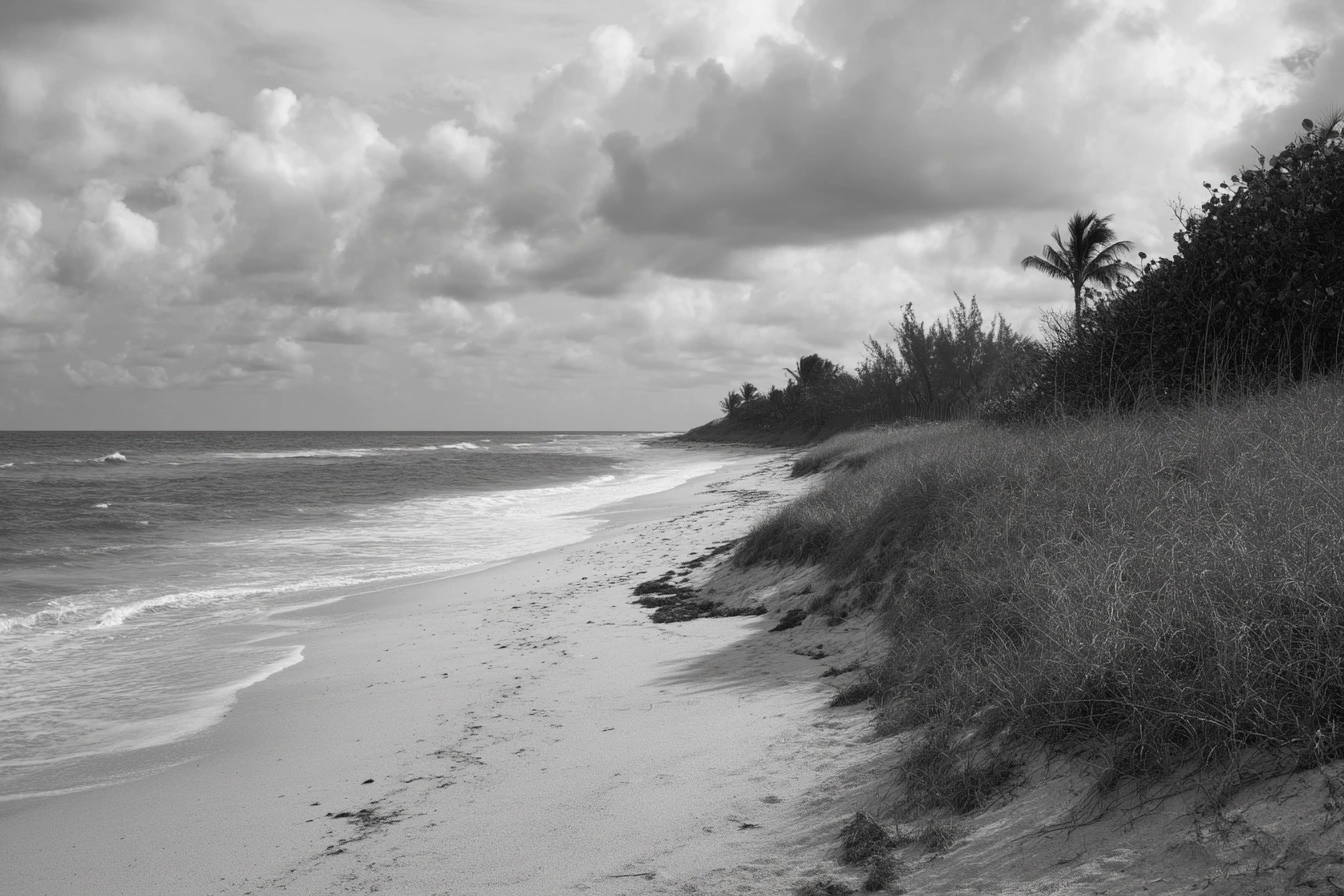
There are no hotels, restaurants, retail shops, or gas stations on Jupiter Island. The Town's zoning has never permitted commercial activity, and the absence of any visitor-serving businesses eliminates the traffic that erodes privacy in other coastal communities.
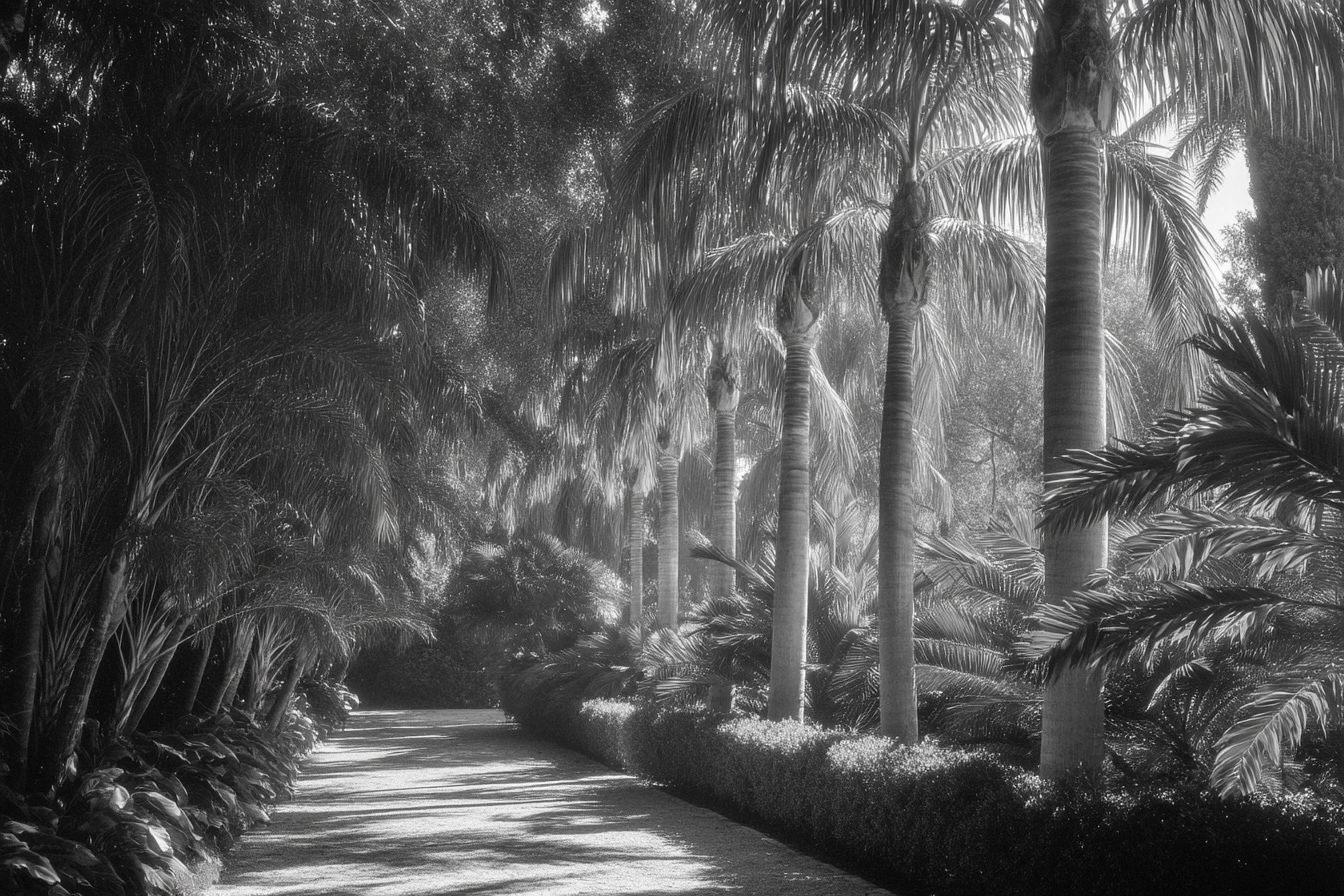
The Town of Jupiter Island maintains strict building codes and architectural review processes that preserve the island's character. Maximum building heights, setback requirements, and density restrictions ensure that the natural environment remains intact.
Common Questions
Jupiter Island home prices start at approximately $5M for riverfront properties, with oceanfront estates ranging from $20M to $75M or more based on closed transaction data. Ocean-to-river compounds have traded above $50M. The median sale price reflects a mix of riverfront and oceanfront closings and fluctuates with the composition of each year’s transactions.
What you get varies by price point. At $5M to $10M, expect a riverfront home with deepwater dock access on a half-acre to one-acre lot. At $10M to $20M, larger riverfront estates with 150+ feet of water frontage or newer construction. At $20M to $40M, direct oceanfront with private beach access and 100 to 200+ feet of frontage on one to two acres. Above $40M, multi-acre compounds with guest houses and, in some cases, full ocean-to-river configurations. Browse current waterfront properties or oceanfront estates across the region for comparison.
The majority of high-end Jupiter Island transactions involve either tear-down rebuilds or significant renovations of existing estates. Much of the island’s housing stock dates from the 1970s through 1990s, and buyers at the $20M+ level frequently acquire an older home for its land position, then demolish and rebuild to current specifications. New construction on Jupiter Island typically takes 18 to 30 months and requires approval from the Town’s architectural review process, which enforces height limits, setbacks, and environmental standards.
Turnkey new-build estates do come to market, but they trade at a premium and move quickly, often through private channels. Buyers should expect that the best land positions, particularly direct oceanfront or ocean-to-river parcels, will often come packaged with an older structure. Evaluating these properties requires understanding both the land value and the rebuild cost, which our team coordinates through local architects and contractors familiar with the Town’s approval process. See our guide to new construction across the region for broader context.
Jupiter Island offers a level of access control and environmental privacy that Palm Beach does not. Palm Beach is accessible via three open public bridges and has commercial districts, hotels, and restaurants along Worth Avenue and Royal Poinciana Way. Jupiter Island controls entry through checkpoints staffed around the clock by a municipal police force and has no commercial activity of any kind.
Palm Beach provides walkable dining, cultural institutions like the Society of the Four Arts and the Flagler Museum, and a social scene centered on its private clubs. Jupiter Island provides seclusion on lots typically ranging from one to three acres, with density low enough that most properties have substantial buffer from neighbors. Both are among the most expensive residential markets in Florida, but the lifestyle is fundamentally different: one is social, the other is private. Explore Palm Beach County neighborhoods to compare.
Yes. The Town of Jupiter Island Police Department staffs checkpoints at both the north and south approaches around the clock. This is a municipal police force with full law enforcement authority, not private security. Officers verify that all visitors have a stated destination on the island before granting entry.
In practice, this means delivery drivers, contractors, and visitors are logged. Real estate agents cannot tour the island without an appointment tied to a specific property. The two public exceptions are Blowing Rocks Preserve on the south end and Hobe Sound National Wildlife Refuge on the north, both accessible for daytime visits. For everything else, access requires either residency or an invitation. See how this compares to other gated communities in the region.
A significant share of Jupiter Island transactions occur without public MLS listing. Sellers on the island value discretion and prefer to avoid photography of their homes appearing online or sale prices entering public record through MLS. These properties circulate through established agent networks and direct homeowner relationships rather than appearing on public search portals.
We maintain the relationships necessary to surface this inventory as it becomes available. On an island with limited active listings at any given time, the difference between having off-market access and not having it is the difference between seeing the full market and seeing a fraction of it. Contact our team to discuss current opportunities, including properties not publicly listed.
Jupiter is a town of approximately 65,000 residents in Palm Beach County, with a housing market spanning $500K condos to $10M+ waterfront estates. Jupiter Island is a separate incorporated municipality in Martin County with its own police force, building codes, and tax jurisdiction. The two share a name and a bridge but very little else.
The Martin County distinction matters for taxes, schools, and governance. Jupiter Island residents pay Martin County millage rates, are zoned for Martin County public schools, and are subject to the Town’s own architectural review and development standards rather than Palm Beach County’s. Day to day, residents access Jupiter’s restaurants, shopping, and medical facilities within a short drive. For a detailed look at the mainland market, see our Jupiter community page.
Jupiter Island’s effective property tax rate, combining all Martin County and municipal levies, typically falls in the range of 1.4% to 1.8% of assessed value. On a property assessed at its sale price, that translates to significant annual carrying costs, but Martin County’s combined millage rates are generally lower than Palm Beach County’s, so an equivalent property would generate a lower tax bill on Jupiter Island than in Palm Beach.
Florida’s homestead exemption reduces taxable value by up to $50,000 for primary residents, and the Save Our Homes cap limits annual assessment increases to the lower of 3% or CPI. Non-homesteaded properties (second homes) face a 10% annual assessment cap instead. Buyers relocating from states with income tax often find that Florida’s lack of state income tax and no state estate tax more than offset the property tax burden. The Martin County Property Appraiser’s office publishes current assessed values for all island parcels.
Wind insurance is typically the largest carrying cost after property taxes. For oceanfront estates, annual wind premiums vary widely based on construction type, roof age, and whether the home meets current building code; the spread between a newer concrete structure and an older wood-frame home can be several multiples. Citizens Property Insurance serves as the state’s insurer of last resort, but many Jupiter Island homeowners use private carriers or surplus lines. Concrete construction with a current-code roof and impact-rated windows significantly reduces premiums.
Flood insurance is a separate policy. Most island properties fall within FEMA zones AE or VE, and even cash buyers should carry coverage. Premiums under FEMA’s Risk Rating 2.0 framework are driven by elevation, foundation type, and distance from the waterline. Florida’s insurance market has shifted considerably in recent years, so current quotes are essential; we coordinate with insurance specialists as part of every transaction to model total carrying costs before closing. For more on coastal due diligence, see our waterfront property guide.
No. Jupiter Island’s zoning does not permit condominiums, townhomes, or multi-family development, and there is no indication this will change. Every property on the island is a single-family residence.
Buyers seeking a lower-maintenance option in the area should look at luxury condominiums in adjacent communities. The Jupiter market includes several waterfront condo buildings, and Palm Beach offers a range of full-service condo options from $2M to $30M+. The single-family exclusivity on Jupiter Island is one of the mechanisms that preserves its low density.
Jupiter Island’s fixed housing stock, permanently constrained by conservation land and Town regulations that prohibit subdivision, has supported consistent long-term appreciation. Oceanfront estates that once traded in the mid-teens have closed at $25M to $40M+ in recent years based on closed transaction data, driven by demand that continues to outpace a supply that cannot grow.
The investment thesis is straightforward: supply is capped and cannot expand. Unlike mainland communities where new construction adds inventory each year, Jupiter Island’s total housing count does not change. Demand from buyers seeking privacy in Florida continues to grow, while the island’s inventory turns over slowly, with many families holding properties across generations. These observations reflect general market trends and should not be construed as investment advice.
Jupiter Island falls within the Martin County School District, not Palm Beach County. The nearest public options are Hobe Sound Elementary, Murray Middle School, and South Fork High School. However, the island’s demographic profile skews heavily toward retirees and seasonal residents, and the majority of families with school-age children choose private schools. Pine School in Hobe Sound (K–12, approximately 15 minutes from the island) is the most common choice; contact the school directly for current tuition and availability.
Other options within 30 to 40 minutes include The Benjamin School in North Palm Beach and Saint Andrew’s School in Boca Raton, both well-established college preparatory programs. There is no school bus service to the island, so families should plan for a daily drive. The proximity to Jupiter and the broader Palm Beach County private school corridor makes this manageable, but it is a practical factor that relocating families should weigh early in the search.
Public access is restricted to two nature preserves. Blowing Rocks Preserve, a 73-acre sanctuary managed by The Nature Conservancy on the island’s south end, is open to the public and features one of the largest Anastasia limestone shoreline formations on the U.S. Atlantic coast. Hobe Sound National Wildlife Refuge on the north end, managed by the U.S. Fish and Wildlife Service, provides public beach access and sea turtle nesting habitat.
Beyond these two preserves, there is no public access. The island’s checkpoints restrict vehicular entry to residents, their guests, and authorized visitors. For buyers considering the island, we arrange private tours of available properties and the surrounding communities to provide full context before a decision.
Jupiter Island buyers value privacy, and transactions here reflect that. We represent your interests with discretion and keep you informed as the right opportunities surface.