Two Ways of Living, One Decision
Palm Beach Gardens · Jupiter · North Palm Beach · Jupiter Island
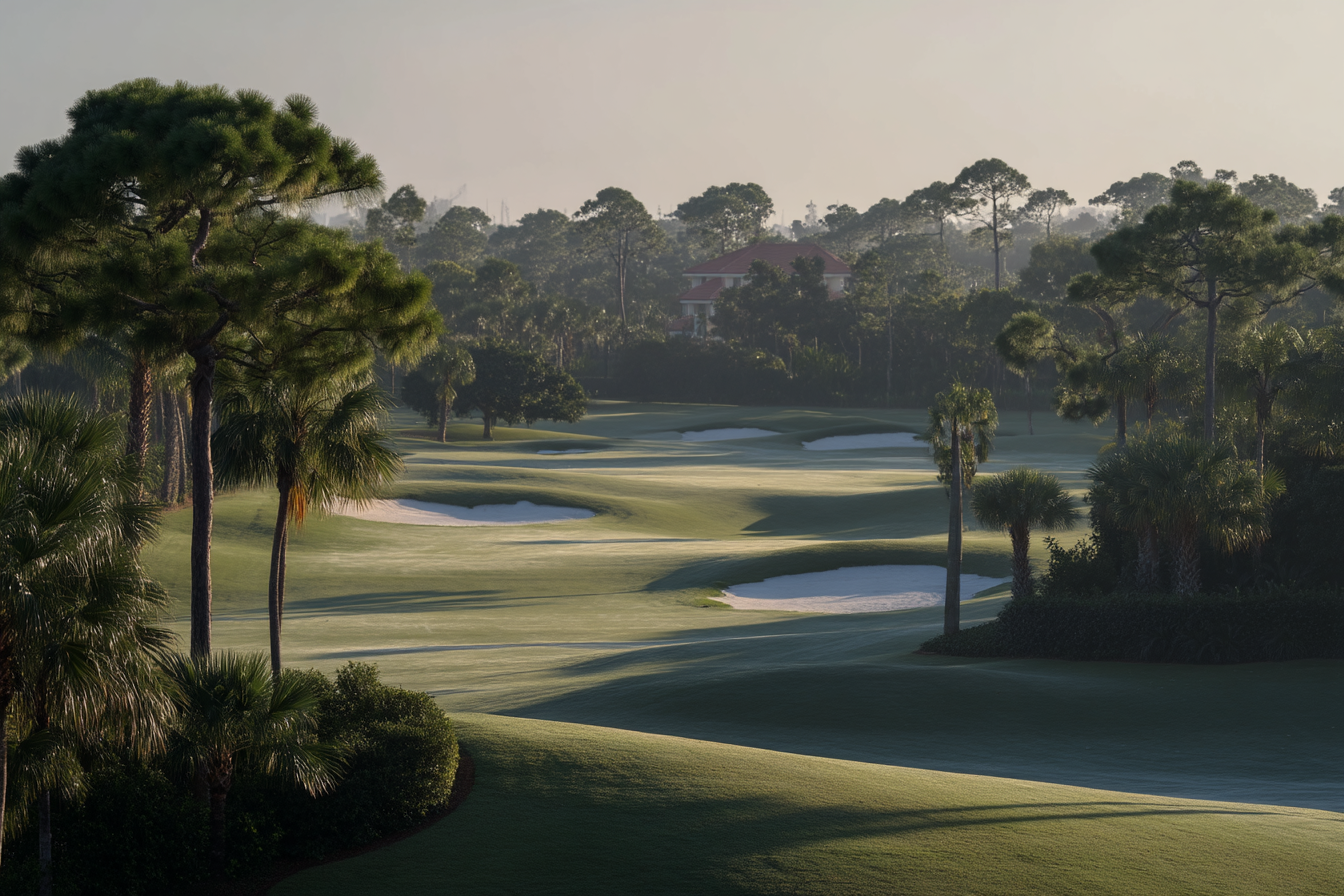
Country-club life in Palm Beach Gardens — Mirasol, Old Palm, Frenchman's Creek, Frenchman's Reserve, and the Bear's Club — offers structure and predictability. The social calendar is set months ahead. Tee sheets, racquet ladders, and junior programs run like a well-funded endowment. Carrying costs are explicit and contractual: initiation or equity contribution at entry, annual dues, and periodic capital calls — all published in the club's governing documents before you sign.
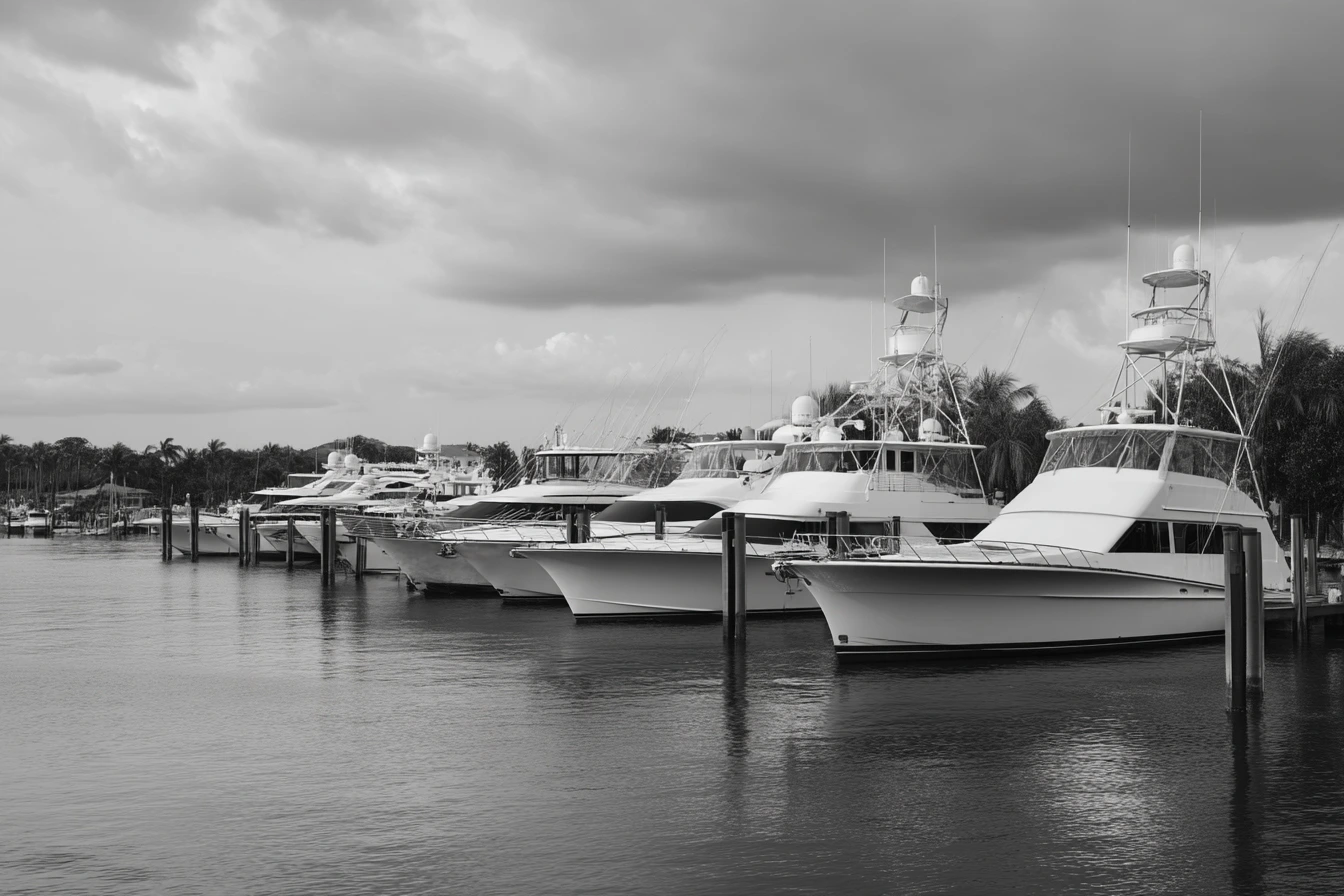
The coast is different. In Jupiter, Jupiter Inlet Colony, North Palm Beach, and along Jupiter Island, value is dictated by physics as much as finish level. Bridges have clearances. Channels have controlling depths. The Jupiter Inlet can shift from flat water to short, steep chop within the span of a tide change and a wind shift. Carrying costs arrive as engineering: seawall cap elevations, tie-backs, dock and lift scope, and insurance that rewards disciplined mitigation.
At Mirasol, you might play nine holes at first light, work through lunch at the club, and pick up pickleball at four. On the water, Tuesday starts with the forecast. You check the inlet, factor in bridge timing, and you're offshore by lunch when conditions allow. Neither is better for everyone. The test is which version feels like the life you are building, not the life you are leaving behind.
Community Profiles: Geography of Choice
Six communities dominate this decision for buyers at the $5M+ tier. Each has a distinct personality, carry structure, and use case. The type tags below reflect primary character: Club (governance and amenity-led), Hybrid (waterborne access within a club framework), and Coastal (marine-first with club access nearby).
Two championship courses, comprehensive racquet and fitness program, and a dining calendar that sustains a full social season. PGA Boulevard corridor convenience with institutional governance. Ideal for buyers who want predictable amenity access and transparent carry.
Estate-lot scale, Tom Fazio course, and a deliberately limited membership. The practice facilities and lot geometry offer a layer of serenity that relocating executives value after years in dense urban environments. Golf-first culture with genuine privacy.
Two distinct communities sharing the PGA corridor address. Frenchman's Creek offers a more established, traditional cadence; Frenchman's Reserve runs newer and slightly more accessible. Both deliver racquets, dining, junior programming, and security within a defined governance structure.
Golf and privacy, in that order. Low density, significant land value, and a culture built around the course rather than the social calendar. The carry is defined by dues and capital policy, not seawalls. For ocean days, the model is to pair ownership with a beach club membership or maintain a nearby cabana arrangement.
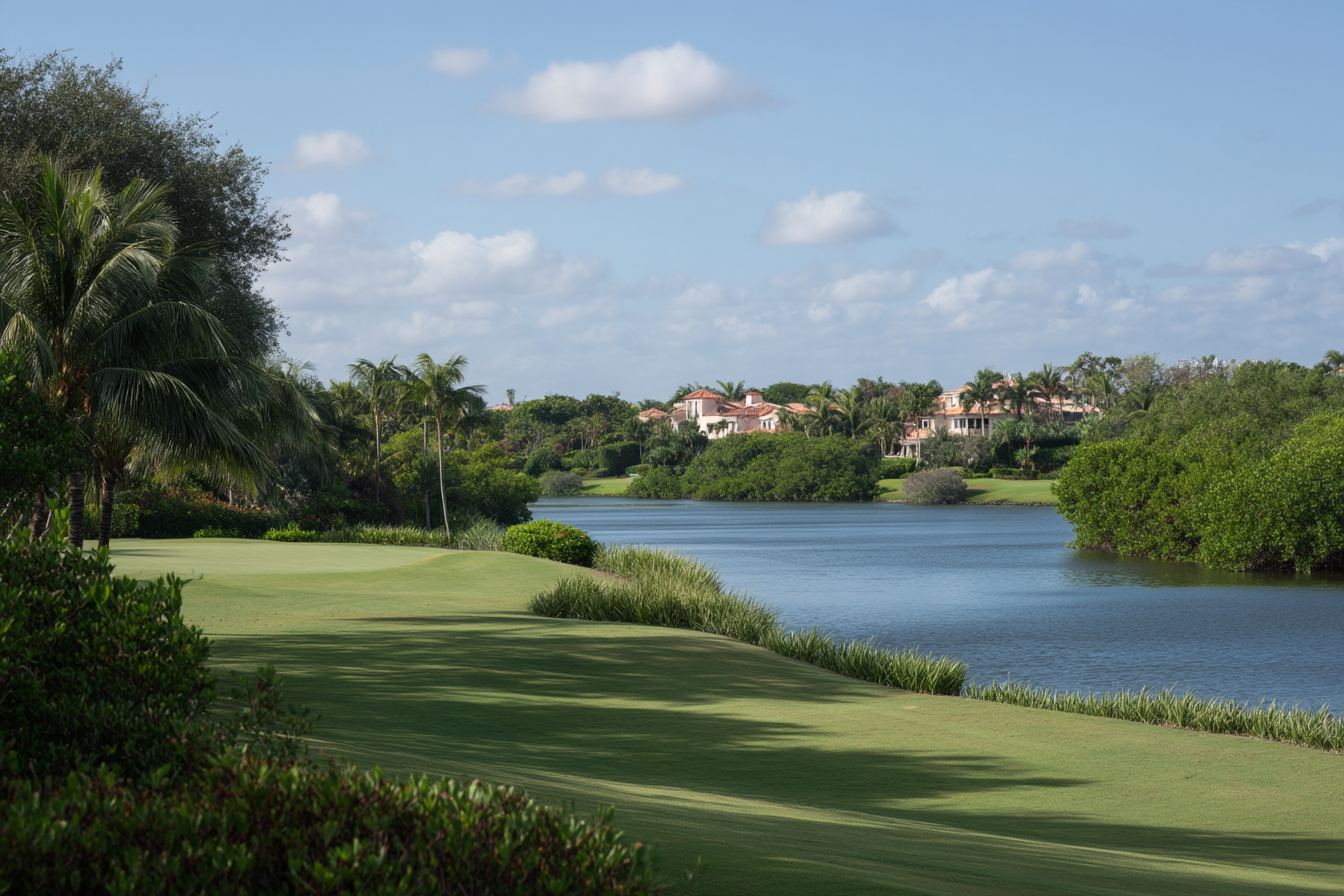
The boater's version of club life. Deep-water canals, marina infrastructure, and proximity to the Jupiter Inlet make spontaneous afternoon runs to the sandbar realistic, not aspirational. Full-service club amenities alongside genuine waterborne access. Underwrite dockage, lift capacity, and the coastal insurance matrix alongside dues.
Old Florida character with ocean access, a beach club, and golf inside one controlled village. Many choose Lost Tree because it compresses complexity: no need to solve separately for an aggressive boat plan and a standalone city club. The carry structure is transparent, the community is intentionally quiet, and the resale universe is self-selecting.
Cabana on the North End vs. Oceanfront on Jupiter Island
For buyers whose primary utility is ocean access — not boating — the comparison narrows to two distinct expressions. Both deliver Atlantic proximity; the differences are in intensity, engineering obligation, and daily friction.
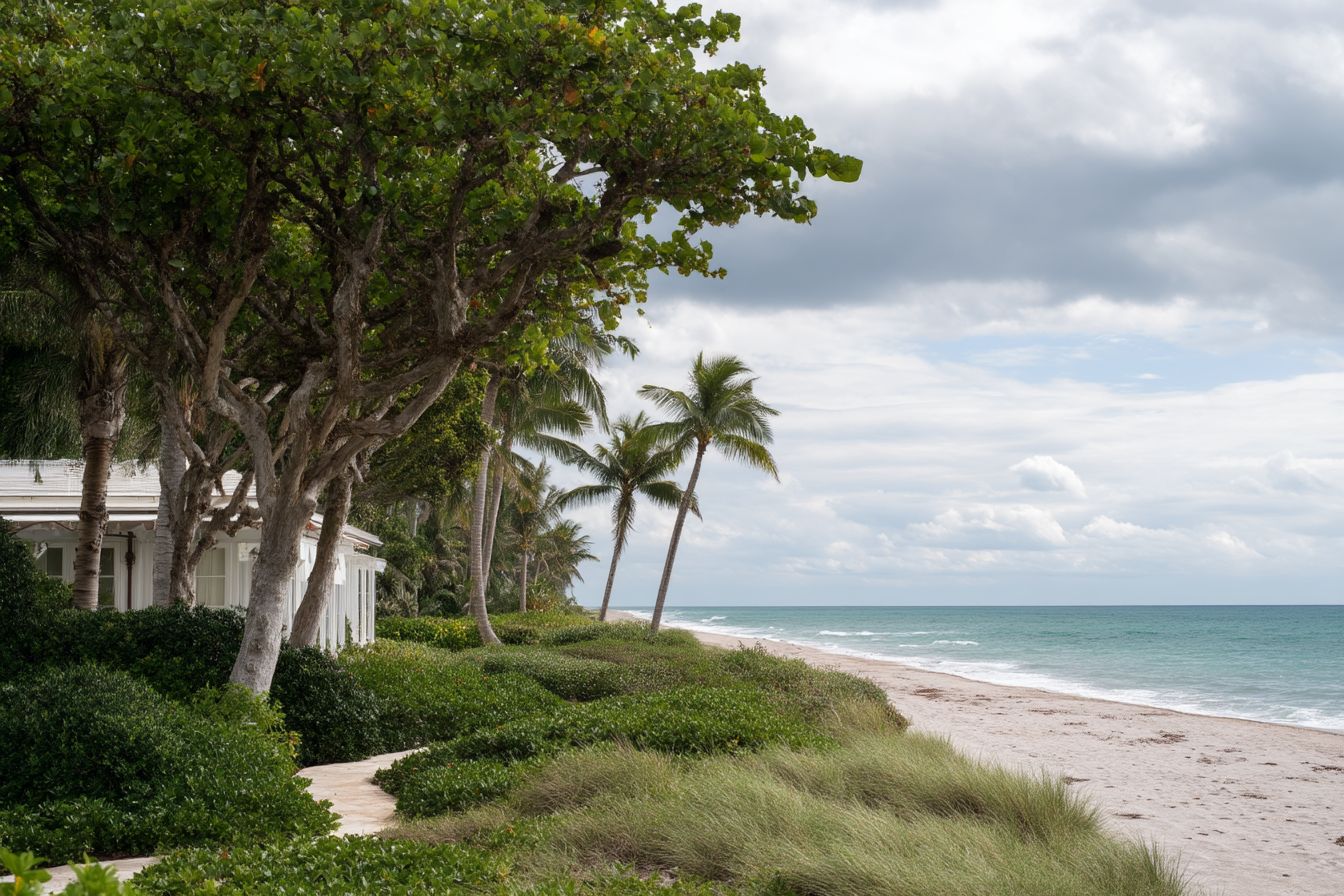
Many North End homes west of A1A include deeded ocean cabanas or access to private cabana rows: simple, salt-polished day rooms that turn a beach morning into a routine rather than an expedition. The water is home, but not the backyard. Engineering obligation is lower than direct oceanfront, but cabana maintenance, dune-friendly materials, lighting compliance during turtle season, and thoughtful storm prep are part of the ownership brief. Ideal for families who live for beach days without requiring the ocean at their doorstep year-round.
The fully expressed version. Solitude, surf checks from the terrace, and a short walk over native dune to the Atlantic. The engineering brief is correspondingly heavier: impact openings, roof geometry that insurers reward, properly anchored dune walkovers, and a security plan that respects the Island's low-key ethos. Vegetation management must respect conservation lines. The dividend, if direct ocean access is your primary utility, is daily contact with the Atlantic that is difficult to replicate elsewhere in Florida at this price point — and a resale profile defined by irreplaceable lot scarcity.
Cost-of-Ownership Guide: Club vs. Coast
The two carrying-cost structures are not directly comparable; they are different architectures of obligation. The question is not which is cheaper, but which cost profile integrates more naturally into your financial planning horizon.
The Fine Print That Matters Later
- Insurance documentation. For both club and coastal properties, keep wind-mitigation reports, four-point inspections, and elevation certificates current. These are not just premium tools; they are part of the file your listing agent will use to compress buyer uncertainty at resale.
- Access verification. On paper, many "waterfront" listings read alike. In practice, bridge clearances along US-1 and Donald Ross, draw schedules, and channel depths sort properties with genuine boating programs from those with scenic water exposure only. Bring a marine contractor into diligence early — before you design a dock scope that the site cannot accommodate.
- Tax sequencing. Florida's Homestead exemption, Save Our Homes cap, and portability rules compress assessed-value growth over time for primary residences. Your first tax bill resets to market on purchase. Plan the sequence with legal and tax counsel if you are relocating from a high-tax state, particularly regarding domicile timing and declaration of residency.
- Governance documentation. For club communities: confirm dues schedule, capital plan, membership category availability, approval timelines, and refundability in writing — before offer. HOA and POA reserves and special-assessment history matter in both club and coastal neighborhoods. Underfunded reserves are a resale liability that belongs in your price analysis, not your post-closing surprises.
- Resale constraints. In mandatory-membership communities, your buyer must clear the club. On the water, your buyer must clear the inlet. Both are real constraints that affect your future buyer pool and therefore your exit price and timeline. Know them before you set your ask.
How to Plan Your First 100 Days
The decisions made in the first 100 days after closing set the cost-of-ownership trajectory for the entire hold period. Buyers who defer this work typically discover it later — in the form of a capital assessment they did not budget for, or a seawall replacement that surfaces at a buyer's inspection.
- Build a total-cost-of-ownership view over a five- to seven-year hold before you finalize your offer. For clubs: dues escalation, capital assessment history, and initiation structure. For coastal: seawall and roof timelines, insurance cost at current mitigation level, and dock and lift scope if relevant. These numbers belong in your offer model, not your post-closing budget.
- Pre-underwrite the carry. Obtain bindable insurance quotes before close, not estimates. On the coast, commission roof, wind-mitigation, and marine inspections. In clubs, request the full governance packet: membership categories, refundability terms, current and pending capital projects, and dues escalation history.
- Confirm category availability in clubs and approval timelines before entering contract. A mandatory-membership community where your preferred category has a 12-month waitlist changes your use profile and your resale timeline simultaneously.
- Match your offer strategy to what the inspection reveals. Exceptional condition with clean documentation justifies a more decisive bid and a shorter diligence path. Properties with access compromises, near-term capital needs, or underfunded reserves invite patience, targeted credits, or a longer diligence window. The file you build in diligence is the file you will hand your listing agent at resale.
Bottom Line
The scorecard and the tide chart are not competing value systems; they are different architectures of daily life, each with a corresponding cost structure, resale profile, and horizon of enjoyment. The error buyers make is treating this as a prestige question rather than a utility question. The right answer matches how you will actually use the property — assessed against a realistic hold period, not the optimism of a first showing.
The carrying costs in both lanes are manageable when they are understood in advance. Club capital assessments, dues escalation, and governance approvals belong in your offer model. Seawall timelines, insurance premiums at current mitigation, and bridge clearances belong in your diligence checklist. Neither is a dealbreaker when modeled in advance; both become liabilities when deferred to post-closing discovery. The buyers who navigate this market well are the ones who build the total-cost-of-ownership view before the offer, not after the inspection.
For buyers choosing club life: Build the total-cost-of-ownership view before you offer: initiation structure, dues escalation history, capital assessment schedule, and membership category availability. Confirm approval timelines and refundability terms in writing. In mandatory-membership communities, your future buyer must also clear the club — a real constraint on your resale pool that belongs in the price analysis, not the post-closing discovery.
For buyers choosing the coast: The carry is engineering, not governance. Commission seawall, roof, and marine inspections before offer. Obtain bindable insurance quotes, not estimates. Confirm bridge clearances, channel depths, and inlet behavior for your specific vessel profile. The gap between a well-documented coastal home with current mitigation credits and one that invites buyer uncertainty shows up as months on market and points off the closing price.
For buyers considering the hybrid position: Admirals Cove and Lost Tree compress complexity by combining waterborne access with club infrastructure inside one community. The diligence combines both checklists: dues and governance alongside seawall timelines and insurance at current mitigation level. The total-cost-of-ownership view for a hybrid position is the most detailed of the three — but the daily life it produces, scorecard and tide chart in the same week, is the one many families in this market ultimately prefer.
This guide is a qualitative framework, not a quantitative market study. Carrying-cost ranges referenced throughout — initiation fees, annual dues, insurance premiums, seawall replacement estimates — reflect current advisor knowledge derived from active transactions, insurance underwriting conversations, and marine contractor consultations in Palm Beach County as of the 2024–2025 season. They are directional and should not be treated as binding estimates for any specific property.
Community profiles reflect general market positioning. Membership categories, availability, wait times, and capital assessment schedules change; all figures should be confirmed directly with club management and verified in current governing documents before any offer is made.
Marine access information — bridge clearances, channel depths, draw schedules — reflects conditions as generally known by active boaters in the market. Tidal and dredging conditions change. Buyers should conduct independent verification with a licensed marine contractor and Army Corps of Engineers permit records as part of formal diligence.
Florida tax information — Homestead exemption, Save Our Homes cap, portability — reflects current Florida Statutes as generally understood. Tax outcomes are specific to each buyer's facts and timing. Consult a Florida-licensed CPA and attorney for guidance applicable to your situation.
Community and club data: Palm Beach Luxury transaction files, Compass MLS data, and direct conversations with club membership directors, 2023–2025.
Insurance market guidance: consultations with Florida-licensed wind and flood insurance brokers active in Palm Beach County, 2024–2025. Wind mitigation credit frameworks per Florida Office of Insurance Regulation published guidelines.
Marine infrastructure: consultations with licensed marine contractors active in the Jupiter and Intracoastal corridor, 2024–2025. Bridge clearance and channel depth data per U.S. Army Corps of Engineers Jacksonville District published records and local knowledge from licensed captains operating in the Jupiter Inlet.
Florida property tax framework: Florida Department of Revenue, Property Tax Oversight Program; Florida Statutes Chapter 196 (Exemptions); Save Our Homes Amendment (Florida Constitution Article VII, Section 4).
Jupiter Island land use and conservation: Town of Jupiter Island zoning and environmental regulations, Martin County Property Appraiser records.