
At the median $6.5 million Jupiter marine waterfront transaction, a buyer acquires roughly 4,800 square feet of living space on a half-acre lot with 100 feet of direct water frontage. That physical asset, combined with Florida's structural tax advantages, is the proposition that draws capital from the Northeast and Midwest into both markets. The lifestyle and appreciation dynamics from that point forward are meaningfully different.
One State, Two Modes
Florida's structural advantages apply equally across both markets. No state personal income tax. No state estate tax. The federal estate tax, however, continues to apply to taxable estates above the current federal exemption — a structuring consideration for buyers at the $10M+ level that warrants coordination with qualified estate counsel before ownership is established. Buyers arrive in Palm Beach County and Miami for the same fiscal reasons, then discover they have made entirely different choices about how to live.
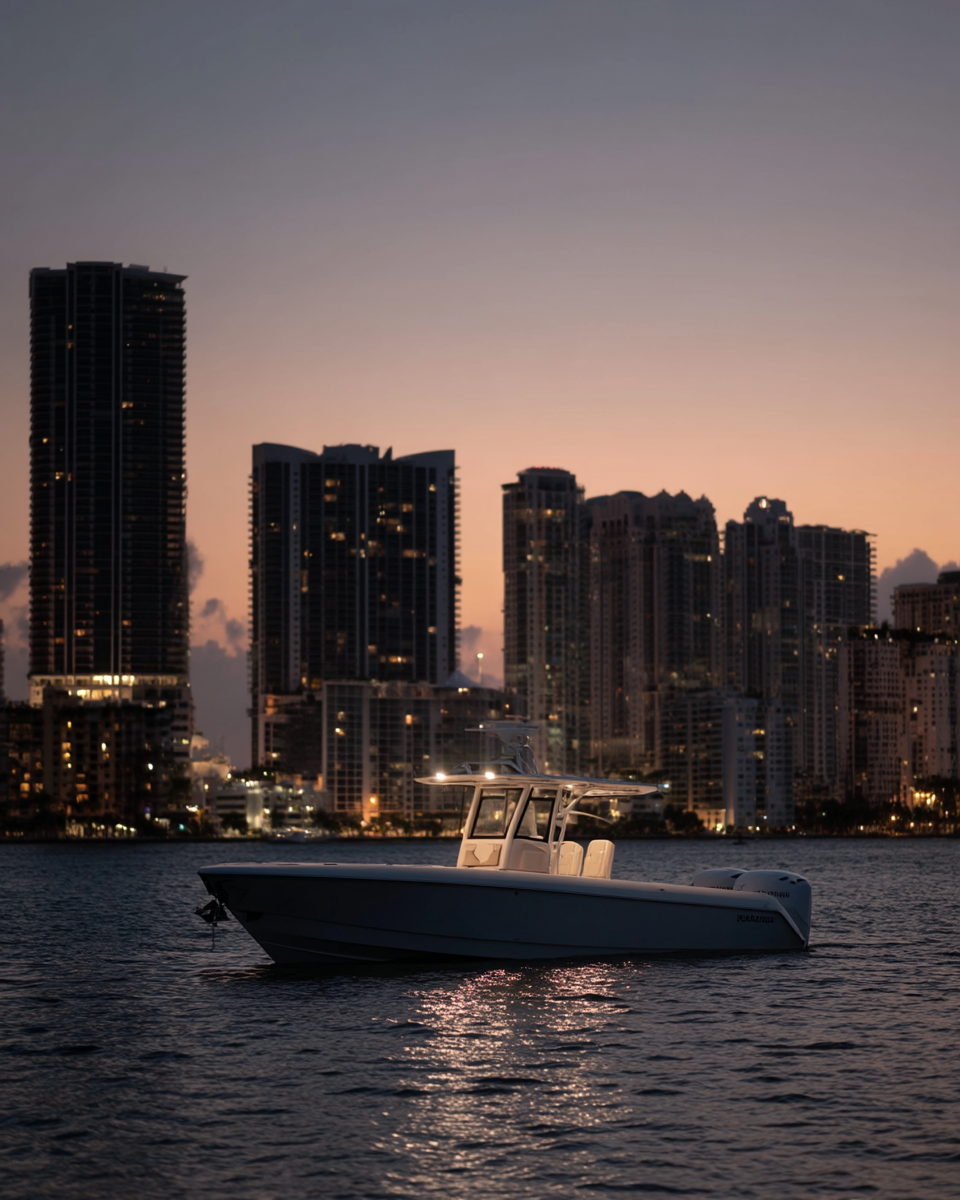
Dense urban energy over Biscayne Bay. International flight network from MIA, financial-services and tech migration reshaping neighborhoods at speed, and a social infrastructure that rewards presence. The city's gravitational pull is its primary value driver.
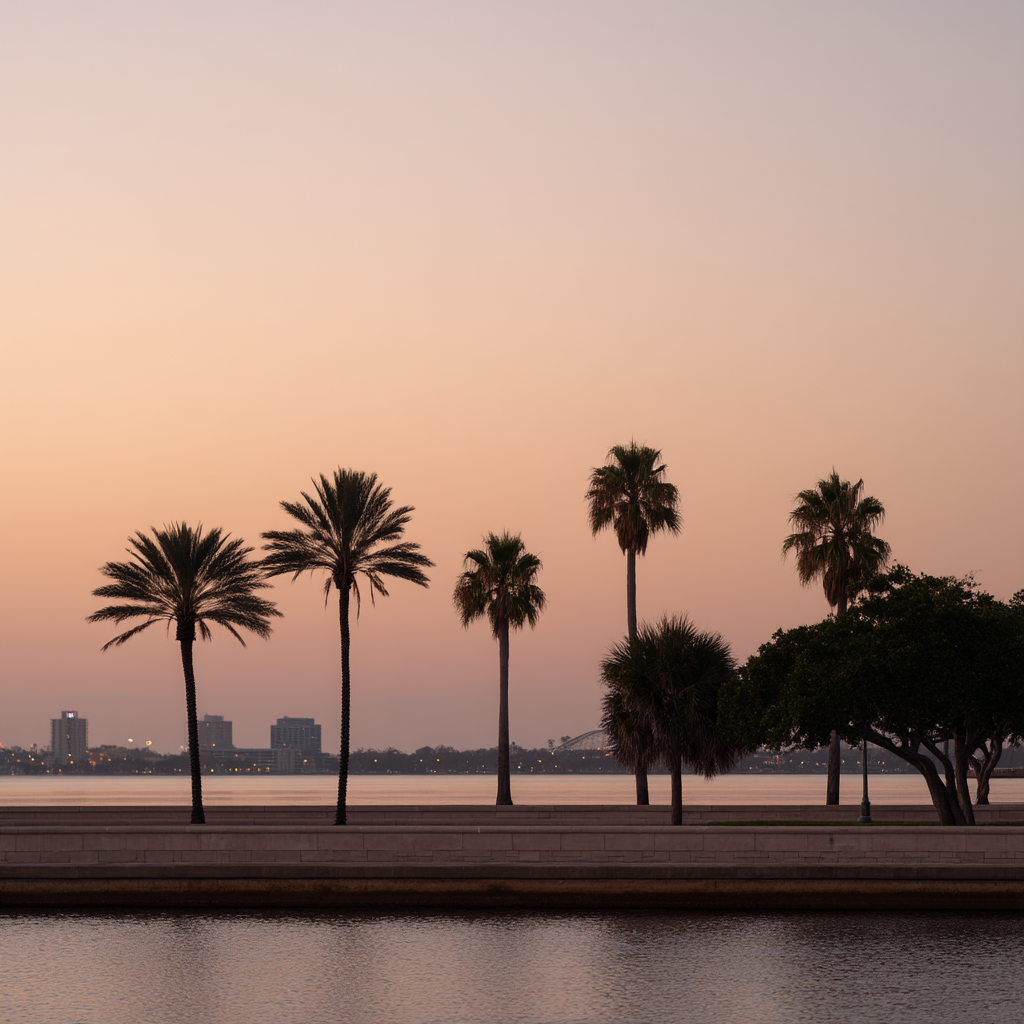
Conservation land, low-density zoning, and a waterfront that cannot be replicated. Daily routines with less friction: shorter queues, shorter school runs, fewer density-driven compromises. The rhythm is quieter, and the supply constraint is what compounds value.
Airports and the Travel Pattern
If your life involves frequent transatlantic, South American, or Asian flights, Miami International's connectivity is a defining convenience. MIA consistently ranks among the top five U.S. airports by international destination count, and its nonstop network — spanning over 100 international destinations — is difficult to replicate from any other Florida airport.
If you value efficiency over scale, Palm Beach International is a different experience. Compact and low-friction, PBI regularly delivers sub-ten-minute curb-to-gate times outside of peak season. For families managing school schedules alongside travel, that operational ease can be worth as much as any nonstop route.
Count the Connections First. Review your international origin-and-destination trips from the past twelve months. If the majority connect through a hub regardless of which Florida airport you depart from, the nonstop argument for Miami narrows considerably. If you fly direct to Europe or Latin America more than six times a year, MIA's network has real, daily value. Your travel cadence should lead the decision, not the airport's profile.
Boating and the Bahamas Crossing
Both regions reward boat owners, but the water experience is fundamentally different. Miami's Biscayne Bay combines a skyline backdrop with a dense network of marinas and quick access south to the Keys. Weekend boating on the bay is integrated into the city's culture in a way that few other American cities can match.
North County offers the Loxahatchee and Indian River system: sheltered, clear water that rewards daily use. The boating is quieter and more personal, structured around knowing your stretch of water intimately rather than sharing it with a larger recreational fleet.
Both crossings are day-trip distance in representative conditions. Actual distances vary with route, vessel, and current. The practical question is whether your vessel plan and your daily boating pattern align better with a dense marina ecosystem and protected bay, or with sheltered river basins and a direct inlet run. Align the home and the vessel before narrowing to a geography.
Privacy, Schools, and the School Run
Privacy reads differently in each market. Miami expresses luxury in the open: views, public life along the Bay, architectural statements visible from the water. Architectural privacy is engineered into gated communities and high-rise floor plans rather than into the landscape itself.
Palm Beach County leans toward discretion. Setbacks, canopy, courtyards, and water as a natural buffer. The properties that hold value longest tend to be the ones that disappear from the road, where the driveway reveals nothing and the waterfront reveals everything.
Map the School Run Before the Floor Plan. Both geographies have strong independent-school ecosystems with credible outcomes at every level. The variable that matters most is the drive time from your preferred neighborhood to the schools your children will actually attend. In Miami-Dade, peak school-run commutes between residential corridors and independent schools routinely exceed 30 minutes each way when bell times, practice schedules, and airport runs are layered in. Confirm the commute before narrowing to properties.
Where Value Compounds
$10 million in Palm Beach County and $10 million in Miami buy meaningfully different physical assets: different square footage, different land, different relationship to the water. Neither is a better deal in the abstract. Both are more efficient than what the same capital would acquire in the markets most buyers are relocating from, once Florida's tax structure is factored into the hold economics over a decade.
Private capital reshapes neighborhoods at speed. Finance and tech arrivals reinforce the city's gravitational pull. In the right pocket at the right moment, appreciation can be significant. The risk is that velocity moves in both directions, and neighborhoods evolve faster than buyers anticipate.
More than 40 percent of Palm Beach County's land is under conservation, environmental protection, or agricultural reserve designation — one of the highest ratios among Florida's coastal counties. Combined with decades of low-density zoning along the North County waterfront, that constraint is structural and permanent. Scarcity-based appreciation moves more slowly and more predictably. The strongest returns come from properties that protect light, privacy, and daily utility.
Jupiter Marine Waterfront, $5M to $10M
86 closed SFD sales, Intracoastal / river / ocean / ocean-access canal, 2023 to 2025
At $6.5M (the median transaction in this range) a Jupiter marine waterfront buyer typically acquires a 4,800 sqft home on a half-acre lot with 100 feet of direct water frontage. The living-area range — 2,574 to 8,159 sqft across 86 transactions — reflects a genuinely heterogeneous market: the same price point can represent a modest waterfront cottage expanded over decades or a purpose-built estate. Parcel geometry and frontage, not square footage alone, are the more durable value inputs. The tax structure and the structural scarcity of the parcel determine whether the physical asset also functions as a durable financial one.
The two forces are complementary, not competitive: velocity to the south, scarcity to the north. The buyers who navigate this decision most effectively identify which force aligns with the rest of their financial structure, then let the lifestyle follow from that clarity.
Structural Principles for Both Markets
A handful of principles consistently separate the purchases that hold their value from the ones that do not. None are about price. All are about how the buyer will actually use the property.
Miami gives back time through nonstop routes and dense services. Palm Beach gives back time through operational ease: shorter queues, shorter school runs, fewer friction points. Identify the time you need most before you choose the market.
In Miami, account for wind and wake when choosing a basin. In North County, let tide, draft, and bridge geometry shape your vessel choice. Align the home and the vessel before evaluating the floor plan.
In either market, true privacy comes from setbacks, canopy, courtyards, and camera-free corridors. It is not a function of price. It is a function of site planning. The properties that protect it hold their value longest.
Florida's tax structure favors both geographies. Beyond that, measure returns by the quality of ordinary days — and ordinary days have measurable inputs. If the boat gets used three times a week because the inlet is seven minutes away, and the school run takes fifteen minutes because the corridor was chosen deliberately, those are the comparables that will matter most at resale, because the next buyer will be running the same calculation.
Bottom Line
Miami and Palm Beach County are not competing answers to the same question. They answer different questions about how you want to travel, how you want to move through water, and what you want an ordinary Tuesday to feel like. Velocity-driven appreciation in Miami is real, and so is the risk that velocity reverses. Scarcity-driven appreciation in North County is slower and more predictable, built on conservation land, low-density zoning, and a waterfront that cannot be replicated. Your financial structure tells you which force to align with. Your daily experience confirms whether the decision was right.
For buyers prioritizing international connectivity and urban energy: Miami's MIA network and dense service infrastructure are not replicable from Palm Beach County. If your travel cadence requires six or more direct transatlantic or Latin American flights annually, the airport advantage is material and daily. Model velocity risk alongside velocity return.
For buyers prioritizing scarcity, low density, and daily ease: Palm Beach County's conservation-backed supply constraint is structural and permanent. PBI's operational efficiency, North County's school corridors, and the waterfront's daily utility compound over a long hold. The premium reflects permanence, not trend.
For buyers evaluating both markets simultaneously: The most durable two-asset structure at this tier typically assigns one market the role of primary operational base — the airport, the school corridor, the weekly rhythm — and the other the role of seasonal or secondary use. Attempting to optimize both assets for primary-use metrics simultaneously is what creates decision delay. Clarify the function of each asset first, then let the property search follow that allocation.
Scope: This article is a general lifestyle and market overview comparing the Miami and Palm Beach County coastal corridors. It does not draw on proprietary transaction data and should not be construed as a formal market report. General educational overview only. Not legal, tax, or investment advice. Equal Housing Opportunity.
Transaction data: The reference data block reflects MLS closed sales, Jupiter SFD marine waterfront (Intracoastal, river, ocean, ocean-access canal; pond, lake, and golf course excluded), sold price $5M to $10M, 2023 to 2025. 86 transactions. Median figures for living sqft, lot size, waterfront footage, and price per sqft are derived from this filtered dataset. The living-area range (2,574–8,159 sqft) reflects meaningful heterogeneity across the dataset; median figures should be interpreted as directional, not prescriptive. General reference only; not a formal appraisal or market report.
Tax references: Florida has no state personal income tax or state estate tax. Federal estate tax applies to taxable estates above the current federal exemption; thresholds are subject to legislative change. Buyers with estates above $10M should coordinate with qualified estate counsel before structuring ownership.
Airport references: MIA international destination count reflects general industry reporting; route networks change seasonally and by carrier. PBI curb-to-gate characterizations reflect off-peak operational conditions. Airport experience varies by season, time of day, and carrier.
Conservation land reference: The 40%+ figure reflects Palm Beach County's combined conservation, environmental protection, and agricultural reserve designations as reported in county land use planning documents. Buyers should verify current designations with Palm Beach County Planning, Zoning and Building.
Nautical references: Crossing distances are approximate nautical miles from stated departure points (Government Cut for Miami; Palm Beach Inlet for North County) under typical routing conditions. Actual distances vary with route, vessel, and current. Always verify current conditions with USCG Local Notice to Mariners before passage.
MLS data: BeachesMLS, accessed 2025. Dataset: Jupiter SFD, marine waterfront (Intracoastal / river / ocean / ocean-access canal), sold price $5M to $10M, January 2023 to present. 86 closed transactions.
Tax: Florida Department of Revenue (floridarevenue.com). IRS Estate and Gift Tax (irs.gov).
Airports: PBI (pbia.org). MIA (miami-airport.com). International destination count: general industry reporting.
Conservation land: Palm Beach County Planning, Zoning and Building — Future Land Use Map and Conservation Element (pbcgov.org).
Nautical charts: NOAA (charts.noaa.gov).
This article is a general educational overview. It is not legal, tax, financial, or investment advice. Coordinate all tax and ownership structure decisions with qualified Florida counsel and a CPA. Equal Housing Opportunity.