The audience is principals and family offices buying or selling at $5M+ who value time, privacy, and design coherence more than headlines. If you fly through Palm Beach International and measure outcomes in hours saved and friction avoided, this is for you.
Why Palm Beach County in 2026
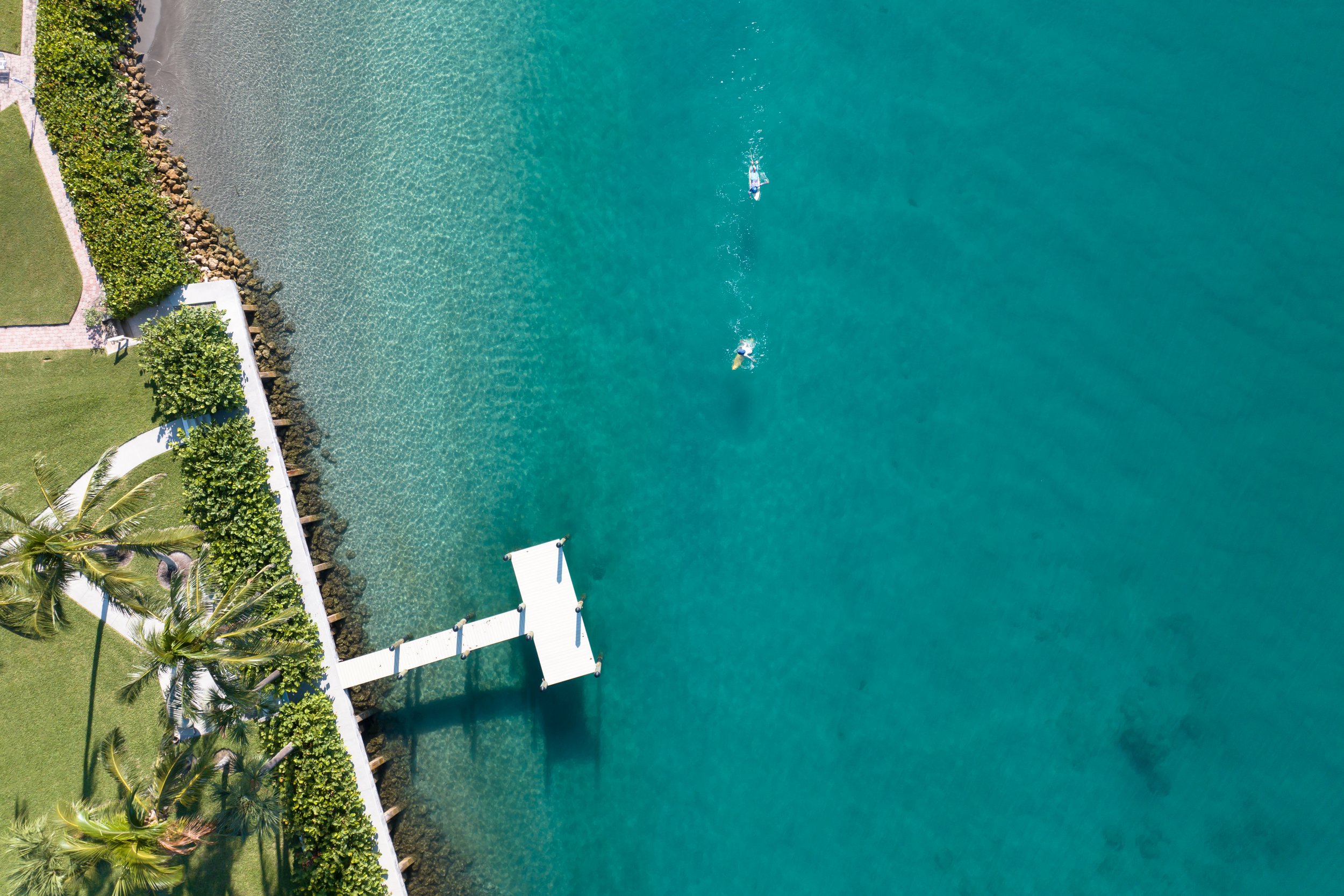
On the North End at first light, you can see the market’s constraints: a finite coastline and a low-rise fabric that cannot expand. That physical reality is the foundation of everything else, and it is why the structural case for Palm Beach County strengthens rather than fades as the market matures.
Market Texture at the Apex. On-island single-family stock is capped by geography and preservation. Through late 2025, cash continued to dominate at the top end and pricing stayed firm, consistent with scarce, design-forward inventory. When the fit is right, act decisively. Scarcity is structural; it does not correct.
The Six Factors That Govern Value
Before touring any property, grade it on six plain-English factors. These determine how a home lives, how it performs through cycles, and how it exits. Apply them before emotional attachment forms.
Physical safety, sightline control, and the ability to live without constant vigilance. Landscape architecture, low-rise form, and community oversight that reduces exposure without requiring fortress aesthetics.
Proximity to private terminals at Palm Beach International, bridges connecting you to the mainland, walkable beach paths, club adjacency, and (for waterfront) inlet access and bridge clearances. Access creates daily time dividends that show up again at resale.
Orientation, ceiling heights, window placement, and the relationship between your home and adjacent properties. Design coherence beats raw square footage. Light, ceiling ratios, circulation, and privacy screens sell faster and live better than “bigger” — and less than owners later wish they had weighted more heavily.
Elevation, drainage, storm hardening, roof condition, impact openings, and envelope performance. FEMA’s Risk Rating 2.0 individualizes flood premiums, making property-level resilience a direct cost driver, not a soft amenity.
Zoning overlays, design review (Palm Beach’s ARCOM), coastal setbacks, historic designations, and HOA architectural committees all affect your ability to improve or expand. Map the permit path before you make an offer.
Clubs, schools, and community cadence. The social infrastructure that determines whether this address fits your family’s rhythm. Club adjacency and school logistics matter more than most buyers initially realize, and less than they later wish they had considered.
For waterfront and North End addresses, weight access and resilience most heavily in your scoring.
First Principles: Turn a Good Purchase into a Great One
The difference between a good purchase and a great one at this tier is almost never price. It is the quality of the diligence framework applied before the offer, and the discipline to let that framework govern decisions rather than emotional attachment to a property’s surface appeal.
Insurance, Flood, and Risk: The 2026 Reality
Insurance has become a design input, not an afterthought. Buyers who handle it well treat it as part of the valuation model — alongside price, access, and program — not as a post-closing surprise.
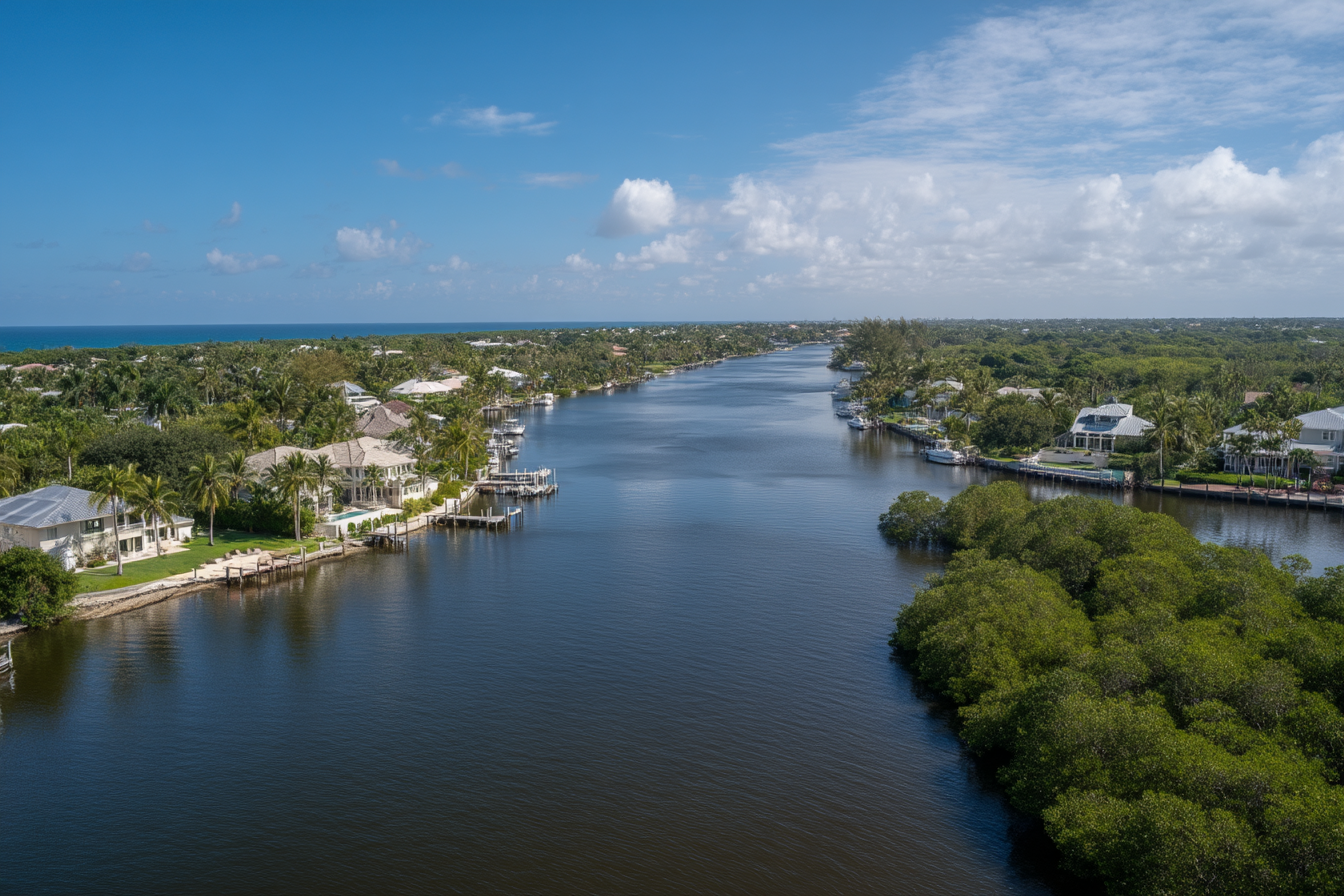
For buyers focused on Jupiter waterfront or Intracoastal properties, three additional variables belong in the diligence file before offer.
General information only. Engage your licensed insurance advisor, marine engineer, and attorney for property-specific guidance. Nothing in this guide constitutes insurance, legal, or financial advice.
The 2026 Checklists
At this level you rarely compete with “the market.” You compete with two or three principals seeking the same daily experience. Buyers win by widening the field and making acceptance easy. Sellers win by narrowing the field and controlling the sequence. The checklists below are different because the games are different.
In Practice: North End, Palm Beach
A relocating finance family from Greenwich wanted walk-to-beach access, proximity to the private terminals at Palm Beach International, and meaningful elevation. On-market comps felt overheated: the headline addresses were priced for their address, not their fundamentals.
We sourced a quiet-street home with dated interiors but strong light, clean drainage, and a sub-10-minute drive to the private terminals. Pre-modeling of flood premiums under Risk Rating 2.0 confirmed that the property’s elevation and foundation type produced a materially lower insurance obligation than comparable addresses on lower ground. Contractor time was reserved before the offer was submitted.
A clean, mostly cash offer with a short close was accepted. The property did not attract competing offers; the presentation was quiet, the terms were certain, and the seller’s question was never about price. Post-close work focused on landscape and glazing upgrades.
* Single anonymized transaction. Appraisal uplift reflects one outcome under the described diligence methodology and is not a return projection.
The Unspoken Laws of Palm Beach Residential
These are not market observations. They are operating principles that have held across cycles and will hold in 2026.
Barrier-island single-family supply is capped by geography and preservation policy. It does not self-correct through new development. This constraint deepens as the market matures; when the fit is right, act decisively.
Bridges, walkable beach paths, and proximity to the private terminals create daily time dividends that compound over a hold. These are not soft amenities; they are quantifiable multipliers on lifestyle quality and resale depth.
At the top end, cash clears. Interest-rate cycles move headlines more than they move outcomes for prepared buyers in this tier. The ability to close on your schedule, not the market’s, is itself a negotiating asset.
Risk Rating 2.0 prices resilience directly into annual carry. Elevation, drainage, and storm hardening are no longer qualitative differentiators — they are quantified line items in every hold-cost model.
Light, ceiling ratios, circulation, and privacy screens sell faster and live better than raw square footage. The 7,000-foot plan that lives like 10,000 outperforms the 10,000-foot plan that doesn’t — consistently, across cycles.
Permits, dated interiors, and landscape gaps are solvable. Priced correctly, that is where the edge lives for buyers who arrive prepared to execute.
Palm Beach vs. Miami: Choose Your Curve
Miami and Palm Beach County are not competing versions of the same product. They serve different buyer profiles, carry different volatility structures, and suit different definitions of daily life. The error is applying one market’s logic to the other.
Miami’s cycle is not Palm Beach’s cycle. Condo pipelines widen pricing dispersion in Miami. Single-family scarcity narrows it on the island. Pick the volatility profile you want to own, and own it with conviction rather than hedging across both.
Define the Brief, Execute with Conviction
Palm Beach County rewards families who buy for how they live, not for headlines. The laws are straightforward: finite land, compounding social capital, efficient logistics, and design that honours light and privacy. The path is clear: define the brief, apply the six-factor scoring before the first tour, approach discreetly, and negotiate with the certainty that a prepared buyer commands. Insurance pre-underwriting, six-factor scoring before the first tour, contractor time reserved before the offer, and proof of funds that speaks for itself are the conditions under which serious sellers choose your offer over a higher, messier one. The buyers who consistently outperform are not the ones who pay the most. They are the ones who arrive most prepared to close.
For buyers applying the six-factor framework: Grade security, access, light, resilience, approval friction, and belonging from available data before requesting a tour. Pre-solve insurance under Risk Rating 2.0 and map the permit path so timing risk is explicit in your offer. Edge-of-trophy addresses with solvable friction consistently outperform headline blocks with latent defects. Arrive with proof of funds, a focused diligence scope, and a closing timeline that means what it says.
For sellers positioning for this buyer pool: The principals reading this guide pre-underwrite insurance, grade properties on six factors before touring, and bid with certainty over complexity. Meet them with a digital diligence room (elevation certificates, surveys, permit history, wind-mitigation reports) assembled before day one. Present design coherence, not square footage. Control cadence with private sequencing rather than broad exposure.
For families relocating from feeder markets: New York, Connecticut, and Chicago to Palm Beach is a one-segment problem through private aviation. The time dividend is real and compounds daily. Coordinate domicile, tax structuring, and club logistics before entering the market. The brief, done properly, removes most of the uncertainty before the first property surfaces, and the six-factor framework ensures the decision is governed by fundamentals, not by the urgency of a relocation timeline.
This guide reflects practitioner observation across BeachesMLS closed transaction data, direct engagement with principals and family offices active in Palm Beach County, and ongoing analysis of flood insurance, zoning, and approval conditions in the market. All market characterizations are directional assessments, not formal statistical extracts from a defined dataset.
References to financing composition (cash share at the top end), days-on-market patterns, and pricing dynamics at the $5M+ tier reflect observed patterns across Palm Beach County and on-island single-family transactions through late 2025. These figures vary by submarket, property type, and period and should not be applied to individual property underwriting without direct MLS comp analysis.
The case study in Section 6 is anonymized and composite. Specific facts (acquisition structure, post-close appraisal uplift) reflect the general profile of transactions executed using the described diligence methodology. No individual property is identified.
FEMA Risk Rating 2.0 premium modeling, Citizens glidepath projections, and flood map designations referenced here are directional. Flood zone status, specific premium obligations, and insurance availability vary by parcel, structure, and policy year. Engage a licensed Florida insurance advisor for property-specific underwriting before any offer.
Nothing in this guide constitutes legal, financial, tax, or insurance advice. Coordinate with your CPA, attorney, and licensed advisors before executing any transaction.
Market Data: BeachesMLS closed transaction data, Palm Beach County single-family residential, $5M+ tier, 2023 through late 2025. Practitioner observation and direct engagement with active buyers and sellers in the market.
Insurance and Flood: FEMA Risk Rating 2.0 methodology and parcel-level premium structure. Florida Office of Insurance Regulation, Citizens Property Insurance Corporation rate and glidepath filings. FEMA Flood Insurance Rate Map updates, Palm Beach County, late 2024 revision cycle.
Aviation and Access: Palm Beach International Airport private departure volume rankings. FAA Form 5010 facility data. Practitioner observation of door-to-door travel times, North End and Jupiter corridor.
Regulatory: Town of Palm Beach Architectural Review Commission (ARCOM) design review process. Florida Statute 420 and related homestead and domicile provisions. Palm Beach County zoning overlays and coastal setback regulations.
Marine: Florida Department of Revenue boat sales tax cap provisions. Practitioner observation of seawall, dock, and inlet conditions across Jupiter and Intracoastal waterfront properties, Palm Beach County.
Economic Context: U.S. Bureau of Economic Analysis state-level income data. Florida Department of Revenue tax structure reference. Net in-migration data from U.S. Census Bureau American Community Survey, Florida.