
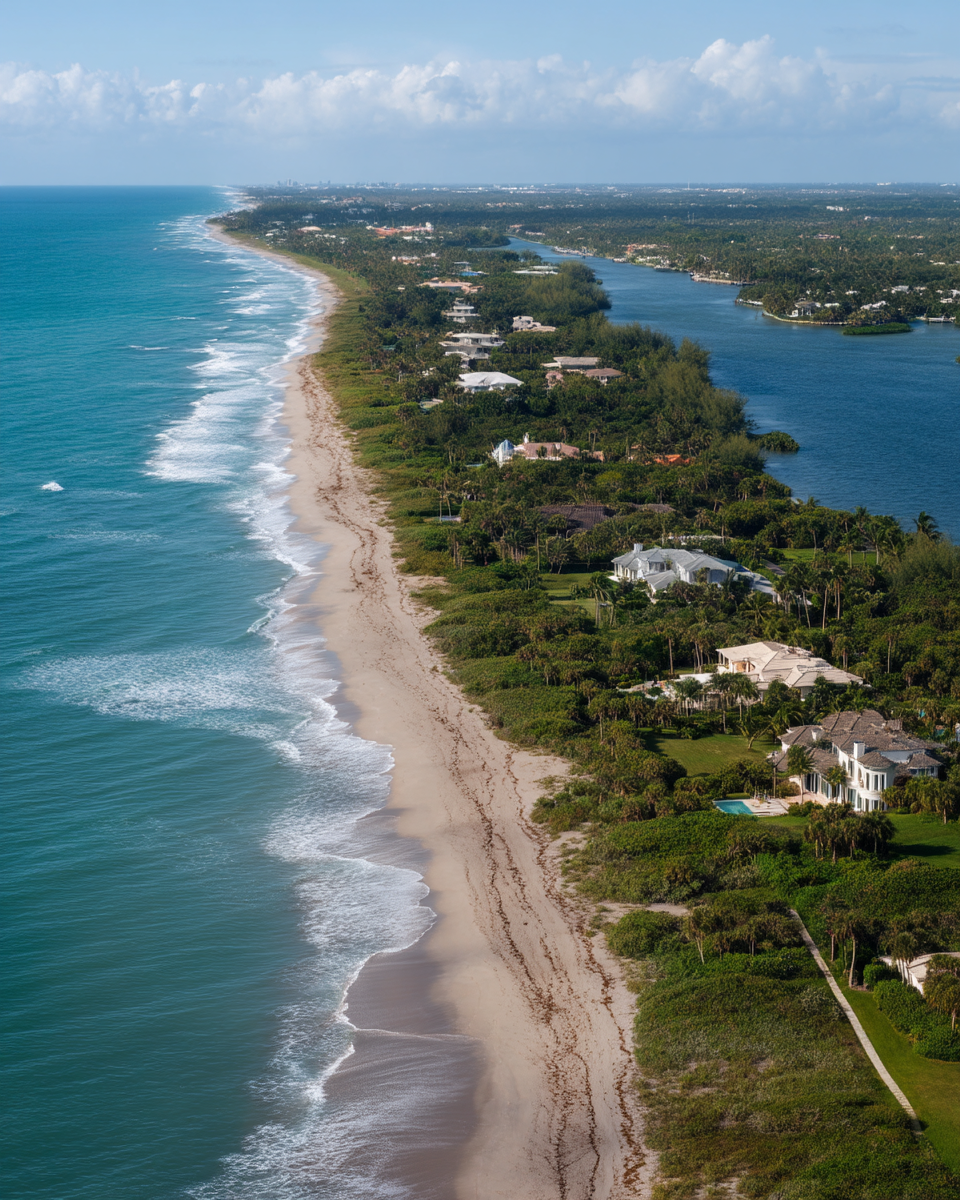
The characterizations below draw on BeachesMLS closed transaction data from 2023 through early 2025, Florida statutory frameworks for documentary stamps and Save Our Homes, FEMA flood map panels, and practitioner observation across Palm Beach County's luxury tier. This is general market education intended as a framework for seller-side diligence, not property-specific advice.
The Sell-Side Calendar
Two mechanics create disproportionate outcomes for luxury sellers in Palm Beach County. Neither involves marketing spend. Both involve timing.
Board meetings, earnings cycles, school breaks, and yacht and golf events dictate who is in residence and who is decisive. These windows are short and predictable. Executive migration and the institutionalization of West Palm Beach's Class-A office market have deepened the qualified buyer pool beyond traditional seasonal patterns, but the concentration of principal-level decision-making still peaks between January and April. Launching reactive to a life event or market headline, rather than building toward that window, costs pricing power and adds days on market that become negotiation leverage for the buyer.
Visibility Sequencing
Staged visibility is staged liquidity discovery. Each channel serves a distinct function, and the decision to move from one to the next should be deliberate, not reactive to calendar pressure. The enabling asset across all three phases is an editorial-grade marketing kit: magazine-quality photography, measured floor plans, and calibrated copy prepared in two cuts, a private buyer brief for early-phase distribution and a launch deck for formal debut. The kit is assembled before the first outreach, not after interest is confirmed.
Private outreach to a vetted micro-list of agents with proven principal relationships. No MLS. No public footprint. Tests true top-end willingness and surfaces intent before any pricing signal enters the market record. Best for trophy assets and privacy-sensitive properties. Tradeoff: fewer at-bats and less competitive urgency without a deadline.
Controlled previews to qualified buyer agents and select global channels. Anchors buyer expectations at the asking price before broad exposure establishes a different narrative. Best for validating price with real buyers without a formal MLS record. Tradeoff: requires disciplined screening. Unqualified previews dilute the scarcity signal.
Formal MLS activation with broad distribution and published, time-bound negotiation rules. Calibrated for Season or a defined liquidity window when principal concentration is highest. Best for properties where competitive urgency is the primary closing lever. Tradeoff: days-on-market becomes a negotiating point after 60+ days.
Staged visibility is the professional standard, but it is not universally optimal. If off-market outreach does not surface qualified intent within three to four weeks, continuing to hold privately costs Season exposure that cannot be recovered. If pre-market previews reach the wrong audience, the on-market debut arrives with the property perceived as quietly shopped rather than freshly launched. Estate sales and time-sensitive dispositions should compress directly to on-market with a structured offer deadline. And if a rate decision or macro event resets buyer psychology mid-sequence, speed may preserve more value than process. The discipline is in knowing when to hold the sequence and when to collapse it.
The Seller's File
The file is everything a buyer's advisory team will request at or before offer, assembled before the first showing. A complete file compresses the timeline, removes contingency leverage points, and signals to the buyer's advisors that the seller understands the asset at a professional level. An incomplete file introduces discovery risk that stalls or kills deals at the worst possible moment.
The Pre-Launch Checklist
Insurance market context. The coastal Florida insurance landscape has changed materially since 2022. Several new insurer entrants since 2023 have expanded capacity, and wind mitigation credits remain meaningful. But underwriting remains exacting: roof age, opening protection, and elevation data are table stakes. A property that cannot be insured at acceptable cost will not close.
Neighborhood Nuance
Each enclave in Palm Beach County operates by its own unwritten rules for access, sequencing, and buyer expectations. The file emphasis, showing protocol, and listing calendar differ materially by submarket. Applying a generic sell plan across these markets is the most common mistake in the luxury tier.
Inlet behavior and bridge timing are the first questions from a buyer's marine advisor. Pre-market previews through boating and golf networks are effective first moves. Listing windows skew late winter through early spring. Operational note: buyer showings frequently involve arriving by boat, which means dock presentation and approach depths are part of the first impression, not an appendix item.
Privacy norms dictate the process. Transactions close off-market more frequently here than in any other PBC submarket. A quiet call to the right agents surfaces intent before the MLS, and often closes there. File emphasis: proof of funds protocols and security logistics for showings.
Micro-inventory and beach-path proximity create natural scarcity that requires no selling. The risk is incomplete documentation discovered post-offer. Operational note: the Colony's small footprint means every recent comparable is known to active buyers. Pricing anomalies are identified immediately.
The buyer profile near office and marina corridors is institutional-grade. Expect diligence timelines and document requests comparable to commercial transactions. File emphasis: engineering packages, environmental assessments, and dock structural reports.
Architectural provenance, beach club access, and the lake trail drive premiums. The buyer pool skews toward principals who have already purchased in PBC and are upgrading within the market, which means they know the comps and will challenge a launch price that does not account for recent closed transactions on the same stretch. Showing windows are narrow and tightly managed by the selling agent.
Ocean plus Intracoastal frontage creates unique engineering and insurance files. Dual-exposure properties require separate wind and flood analyses for each frontage, and the structural engineering package is typically the first document a buyer's team requests. Expect the diligence timeline to run longer than single-frontage waterfront.
Pricing and Negotiation
Pricing strategy at the luxury tier functions as narrative, not calculation. A one-page valuation memo frames the property's scarcity (water orientation, access quality, architecture, permitted improvements), triangulates a launch price using macro appreciation context and like-kind local comps, and serves both the seller's pricing conviction and the buyer's justification to their advisors. The memo is the first document a buyer's family office reviews. If it reads as aspiration rather than analysis, the conversation shifts from price validation to price discovery, and the seller loses positioning.
Negotiation structure is set at launch, not improvised at offer. Publish offer rules: deadline windows, escrow norms, and explicit parameters for finance and inspection contingencies. Require proof of funds and broker record before property access. No open houses for assets above $5M. The showing process itself signals the character of the transaction.
Post-acceptance, keep engineers, surveyor, closing agent, and any marine contractors on standby before the offer deadline. Delays post-acceptance introduce renegotiation risk at the worst possible moment.
Repair and Upgrade ROI
Renovation logic at the luxury tier inverts compared to the broader market. Buyers above $5 million are not buying finishes; they are buying certainty. Friction removal outperforms renovation spend in almost every scenario where the sale is compressed to a defined selling period.
Tax and Net Sheet
Two items belong on every seller's net sheet before a price is set. Both are costs that flow directly from the sale and both are routinely underestimated or discovered late.
In Palm Beach County, documentary stamp tax on the deed is a seller cost at $0.70 per $100 of consideration under Florida statute. On a $15M closing that is $105,000. On a $20M closing, $140,000. This number belongs in your net sheet from day one. Agree on cost allocations with your attorney before contract negotiations begin.
If you have homesteaded this property, your assessed value has grown at no more than 3% per year under the Save Our Homes cap while market value compounded far faster. That gap is a real economic benefit you carry as long as you own the property. A sale extinguishes it entirely. Florida's portability provision allows you to transfer up to $500,000 of accumulated differential to a new Florida homestead, provided you apply within three years. For sellers who have held a long-appreciated property, the accumulated differential may be far larger than the portability cap. Understand the size of your differential before you price the sale.
PBC vs. Miami
For sellers evaluating jurisdiction and process, the structural differences between Palm Beach County and Miami are meaningful, and the choice is not always obvious. The question is not which market is better. It is which process model serves the specific asset, seller timeline, and target buyer profile. A single-family waterfront estate on Jupiter Island and a condo position at the Bristol require fundamentally different selling environments. Choosing the wrong process for the asset is more expensive than choosing the wrong price.
Single-family waterfront and golf estates dominate the product mix. Buyer diligence runs through engineering, survey, marine access, and insurance, not condo documents and association reserves. The showing cadence is slower and more controlled. Lake Worth Inlet provides robust deep-water access that Miami's smaller cuts do not match for deeper-draft vessels. Best for: waterfront estates, privacy-sensitive sellers, and transactions where the diligence file is the differentiator.
Tower and condo volume with a broader international buyer pool and higher showing velocity. For sellers exiting condo positions, liquidating investment holdings, or targeting international capital, Miami's velocity model and global agent network may serve the sale better than PBC's process approach. Marine access varies by location, with smaller inlets limiting draft. Best for: condo exits, investment liquidations, and assets where broad exposure outperforms controlled access.
Bottom Line
The sell-side process that protects your net is not a marketing exercise. It is a sequencing problem: timing calibrated to buyer-concentration windows, a file that eliminates every contingency leverage point before the first appointment, visibility staged to test intent before committing to broad exposure, and pricing anchored by a narrative that survives the buyer's advisory review. The sellers who leave money on the table are the ones who launch before the preparation is complete, or who hold a failing off-market position past the point where it costs them their seasonal window.
For sellers above $10M: Build a six-to-ten-week runway ending in a January-April debut. Test intent privately first, but if off-market outreach does not produce qualified interest within four weeks, collapse to on-market before you lose your seasonal window. Every week past April costs DOM and pricing power.
For waterfront sellers: Your buyer's marine advisor will request navigation and dock data at or before offer. If those answers are in the file before the first showing, you compress the timeline and eliminate a renegotiation trigger. If they are not, you have handed the buyer's team a lever they will use.
For sellers evaluating PBC vs. Miami: If your asset is a single-family estate and your buyer is a principal, PBC's process model rewards your preparation. If your asset is a condo or your target is international capital, Miami's velocity model may serve the sale better.
This guide reflects market conditions and regulatory frameworks as of early 2025 for Palm Beach County, Florida. Specific transaction data referenced is drawn from BeachesMLS records and practitioner observation. This is general market education, not property-specific advice. All insurance commentary is general and informational; Florida insurance market conditions evolve rapidly. Engage a licensed Florida insurance advisor for property-specific coverage analysis, premium projections, and carrier eligibility.
All tax and ownership commentary is general and informational. Documentary stamp tax obligations, Save Our Homes portability calculations, and the implications of entity or trust ownership vary by individual circumstance. Entity-held, trust-owned, and foreign-owned properties each carry additional transfer implications that should be resolved before listing. Consult your real estate attorney and CPA.
Inlet conditions, controlling depths, and bridge clearances are subject to change due to dredging, nourishment, and infrastructure projects. All navigation data should be independently verified against current NOAA charts and local port authority records at the time of any transaction. References to buyer behavior, seasonal patterns, and market dynamics are directional characterizations, not a formal statistical extract. Figures vary by submarket and period and should not be applied to individual property underwriting without direct MLS comp analysis.
BeachesMLS closed transaction data, 2023-2025. Florida Statute 201.02 (documentary stamp tax). Florida Statute 193.155 (Save Our Homes). FEMA Flood Insurance Rate Maps, Palm Beach County panels. NOAA navigational charts, Jupiter Inlet and Lake Worth Inlet.