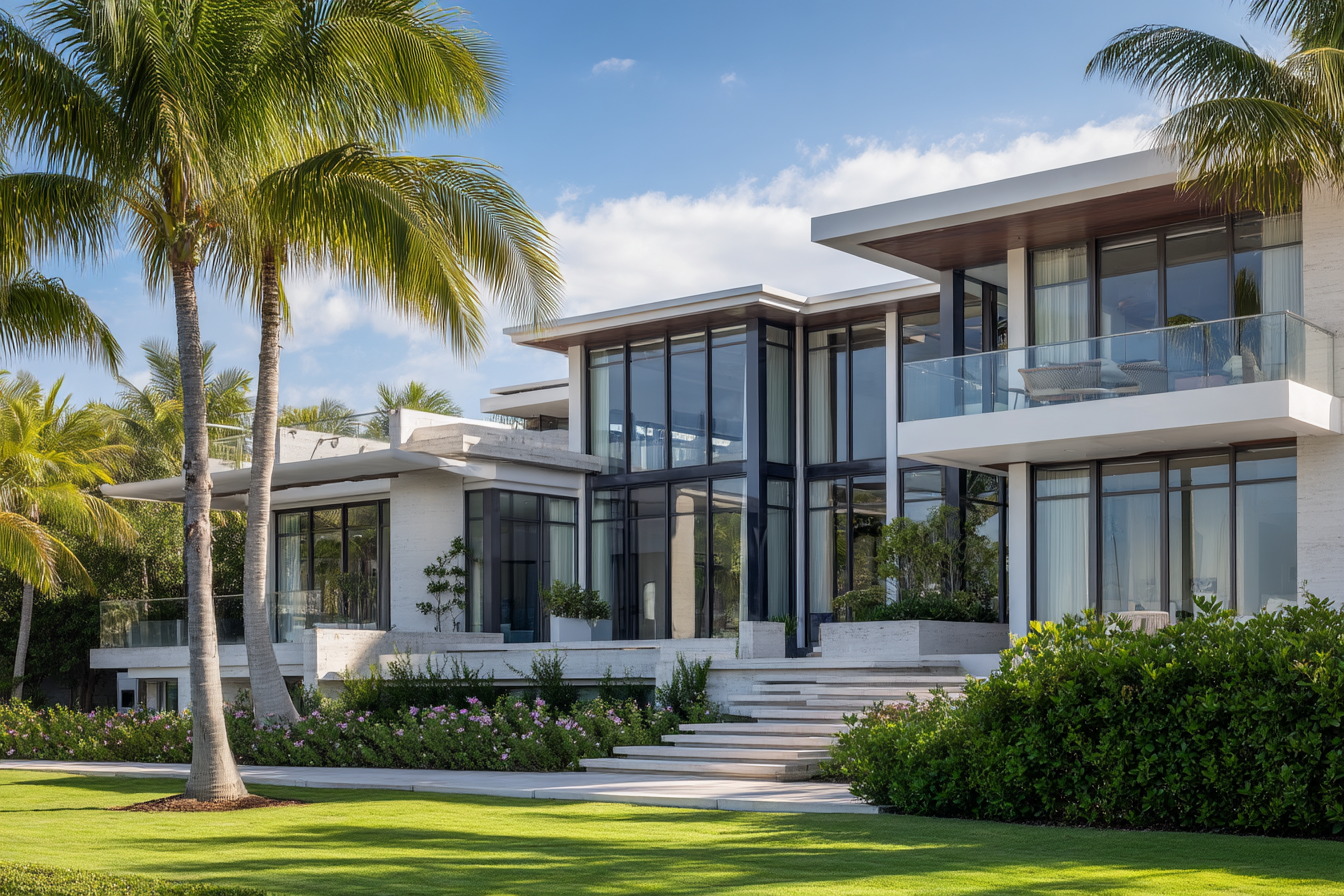

The framework applies across Palm Beach County's $5M+ tier: Jupiter, Jupiter Island, Tequesta, Jupiter Inlet Colony, West Palm Beach, the North End of Palm Beach, Manalapan, Palm Beach Gardens, and North Palm Beach. From inlet-ready waterfronts to club-centric estates, the sequence is consistent. See first, write clean, close with confidence.
Buyers Compete With Buyers. Sellers Compete With Sellers.
The most useful reframe in luxury real estate negotiation: your competition changes depending on which side of the table you occupy. Buyers compete against other buyers for the seller's attention. Sellers compete against other listings for buyer attention. Once the distinction is clear, the right moves follow logically.
A clean offer with a scoped seven-day inspection window and proof of funds in the file beats a higher but conditional offer from a less-prepared buyer most of the time. At $5M+, a seller's agent evaluating three offers is asking one question: which of these buyers actually closes? Arrive with pre-underwritten financing, insurance indications in motion, and a one-page fact sheet, and that question answers itself before the seller finishes reading page one.
Win by sequencing intelligently: private-first to test price and narrative, then public with documentation that removes perceived risk before the first showing. Elevation certificates, seawall reports, wind-mitigation records, and full disclosures ready on day one convert a frictionless closing path into a pricing advantage. The seller who arms buyers with clean data becomes the market's reference point; the neighbor without it becomes the comp that lost.
First Principles: Bias-Free Buy Rules
Disciplined buyers in the $5M+ tier operate from a fixed decision framework that removes emotion from the process before it can inflate the price. These rules are set before touring begins; they are not adjusted mid-process.
Private, pre-market, and paused inventory are the real pipeline. Public portals are the last place serious buyers look, not the first. Access to off-market supply changes the competitive dynamic entirely at this tier.
Lock a decision matrix before the first showing: water access, club affiliation, school logistics, privacy requirements, lifestyle cadence. Tours confirm preferences; they do not create them. Buyers who decide during tours overpay.
Clean terms and a well-defined diligence window beat higher, messy bids. The offer that closes with certainty is worth more to a motivated seller than the offer that merely flatters the asking price.
Quote wind and flood insurance, pull elevation and roof data, and pre-underwrite the transaction before submitting any offer. Discoveries during inspection should confirm your price calculation, not initiate it.
Pair decisive execution with post-close upgrades that preserve resale value. The right acquisition is disciplined on entry and thoughtful about ten-year trajectory. Price paid matters; basis relative to comparable supply matters more.
PBC and Miami reward different buyer profiles. Applying Miami transaction logic to a Palm Beach acquisition, or vice versa, is one of the most common and avoidable errors at this tier. Know the distinction before touring either market.
Inventory You Don't See
In the $5M+ tier, a meaningful share of supply never reaches broad distribution. Sellers at this level value discretion; agents protect relationships; and some of the most compelling properties trade quietly before a listing is ever created. Access to this inventory is not a marginal advantage: in a supply-constrained market, it is the difference between chasing and choosing.
With proof of funds on file, a buyer can be cleared to tour before a listing has any public footprint. That access changes the competitive calculus entirely: instead of competing with the full market, the buyer is the market.
Offer Architecture
A great offer is not a number; it is a decision framework presented as a document. Strong earnest-money structure, clear timelines, and scoped contingencies that protect the buyer without alarming the seller. The goal is to make the seller's answer obvious before they reach page two.
Appraisal & Financing Strategy
Your valuation package needs to do two things simultaneously: give an appraiser working from limited comparables the analytical support to reach your number, and reassure the seller that the financing path will not become a renegotiation event.
We build a short supporting deck that travels with the offer: lineal water footage and depth data, bridge clearance, orientation, roof age, impact systems, drainage, permits, and the micro-comp logic explaining why this specific street or basin justifies the price. This document arms your lender's appraiser and stabilizes the appraisal conversation before it becomes a problem.
Many principals in this tier close cash, then add leverage through portfolio loans or securities-backed lines to optimize post-close. Others run a pre-underwritten conventional loan from day one. Either path works. The seller should see certainty, not conditions.
Brief the banker before the offer, not after. Your banker should know the property, the timeline, and the seller's likely concerns before the offer is submitted. A seller's agent who can make one phone call and hear "this file is ready to close" is a seller's agent who recommends acceptance. One calm paragraph from the right banker, delivered directly to the listing agent, does more for seller confidence than ten enthusiastic ones from the buyer's team.
Inspection & Insurance as Offense
Most buyers treat due diligence as a pause. The better frame is the opposite: a well-run inspection process is one of the most powerful tools a buyer has for converting findings into documented price credits. Seven days is sufficient, provided you arrive prepared to use each of them.
Palm Beach County vs. Miami: Different Frameworks
Buyers evaluating both markets are not choosing between two versions of the same thing. The markets reward different buyer profiles, carry different risk structures, and suit different weekly schedules. Applying Miami transaction logic to a Palm Beach acquisition, or vice versa, is one of the more common and avoidable errors at this tier.
Price behavior in PBC's $5M+ band is scarcity-driven and comparatively stable: lineal waterfront footage, inlet access, and club proximity are finite. Demand comes from buyers whose week runs on golf, marina, and school rhythms. Diligence priorities are seawall condition, elevation, inlet navigation, and wind insurance. Retrade risk at this price band is lower than in event-driven Miami cycles. The buyer most suited to PBC is one whose life produces more usable hours here than in an urban core.
Miami's $5M+ market moves faster and with more volatility. Demand is driven by cultural density, international capital flows, and access to urban infrastructure. The lifestyle cadence is kinetic and event-led. Diligence priorities shift toward condo documents, reserve fund health, and special assessment exposure. Retrade risk is elevated during event-driven price spikes. The buyer most suited to Miami is one whose week genuinely benefits from nightly access to culture, dining, and urban life.
The practical question is not which market is better. It is which market matches the buyer's weekly schedule. Buying the wrong lifestyle at the right price is expensive in ways that don't appear on the closing statement.
In Practice: West Palm Beach Waterfront, 2024
A Chicago-based executive was evaluating West Palm Beach waterfront as a primary Florida residence, with access to downtown office locations and a preference for PBC's enclave structure over Miami's urban density. We surfaced a pre-market waterfront with new impact openings but an aging roof and an older seawall cap. These conditions, identified in advance, became the basis for offer structure rather than grounds for hesitation.
The offer was submitted with proof of funds, a pre-underwritten term sheet from a direct private banking contact, a seven-day inspection scope, and insurance indications plus an elevation certificate already in the packet. The seller's agent had one phone call to make to verify readiness. A competing offer arrived two days later, priced higher, with a standard pre-qualification letter and an open-ended inspection period.
Inspection on day three revealed seawall tie-back fatigue. Within 48 hours we had two contractor quotes and converted the finding into a closing credit exceeding the anticipated repair cost. The seller accepted: the documentation was clinical, the request was specific, and reopening to the market was not an attractive alternative.
The seller accepted not because the offer was larger, but because the process was clean, the documentation was complete, and the outcome was certain. Preparedness, not price, closed this transaction. The buyer completed a generator upgrade and dock power installation within the first weeks of ownership, having budgeted both before the offer was submitted.
The Decisive Move
At $5M+, the offer that closes with certainty is worth more to a motivated seller than the offer that prices highest. Preparation before the first tour, not negotiation skill during the deal, is what separates buyers who secure properties from buyers who get outbid on price. Inspection is the last offensive position in the transaction; a seven-day window with parallel specialists and same-day insurance indications converts findings into documented credits before the seller has reason to reconsider.
For buyers at $5M+: Front-load risk before the offer. Pre-underwrite with your banker, pull elevation and roof data, and get insurance indications in motion before you tour seriously. When the right property surfaces, submit with proof of funds, a pre-scoped seven-day inspection, and a direct banker contact for one-call verification. Your competition is every other buyer in the market; the one who arrives most prepared closes, regardless of who prices higher.
For buyers choosing between PBC and Miami: The question is not which market is stronger. It is which market matches your weekly schedule. If your life runs on golf, marina, and school rhythms, PBC produces more usable hours per year. If you need nightly access to urban culture, Miami is the correct answer at any price.
The key distinction: A higher competing offer lost this transaction. Certainty closed it. The buyer who pre-underwrites, scopes the inspection, and briefs the banker before submission is structurally harder to beat than the buyer who simply prices higher.
Scope: This guide reflects market conditions and general transaction practices in Palm Beach County, Florida as of 2025. Case study details have been anonymized. This is general market education, not property-specific advice.
Days-on-market and transaction characterizations reflect practitioner observation across BeachesMLS closed data for residential transactions at $5M+ in Palm Beach County, 2024–25. These are directional characterizations, not formal statistical extracts. Figures vary by submarket and period and should not be applied to individual property underwriting without direct MLS comp analysis. Cash transaction share is similarly a directional characterization based on practitioner observation; it has not been formally derived from a statistical extract of closed data.
Insurance and inspection commentary is general and informational. Property-specific coverage, insurability, and inspection findings vary materially by address, construction type, and age. Engage a licensed Florida insurance advisor and a qualified inspector before making any offer decisions.
Financing references to pre-underwriting, portfolio loans, and securities-backed lines are general in nature. Lending structures vary by institution and individual financial circumstance. Consult your financial advisor, lender, and attorney before structuring any transaction.
PBC vs. Miami comparison reflects qualitative practitioner assessment across both markets. It is not derived from a formal statistical extract of Miami-Dade MLS closed data.
Transaction data: BeachesMLS, practitioner observation 2023–2025. Days-on-market references cover closed residential transactions at $5M+ in Palm Beach County. Market characterizations reflect the 2024–2025 observation period.
Cash transaction share: directional characterization based on practitioner observation of BeachesMLS closed data at the $5M+ tier. Not a formal statistical extract.