
What SeaGlass Is
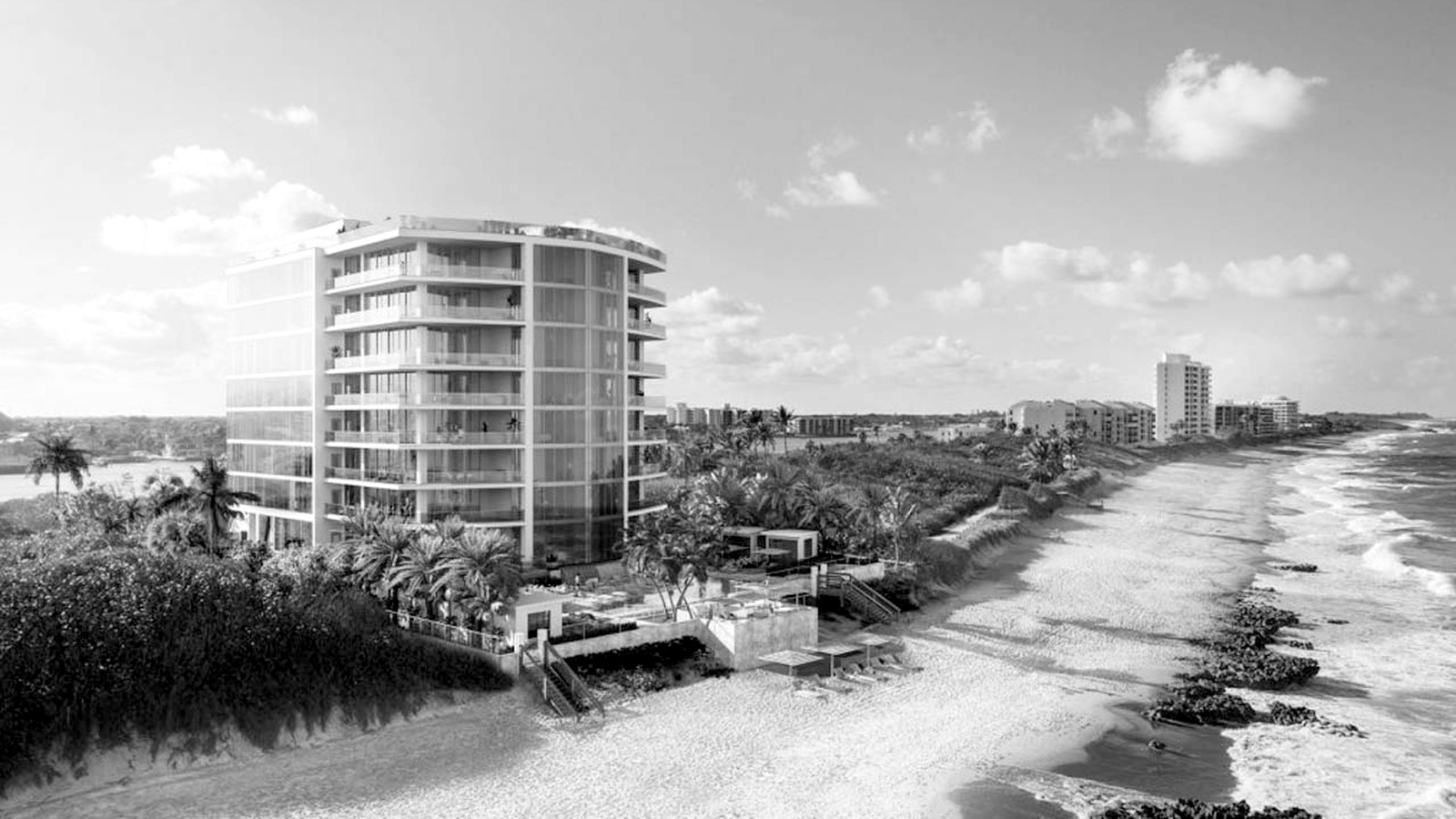
SeaGlass is Jupiter Island's newest condominium, and nothing of its kind stands anywhere else on the southern beachfront. Twenty-one residences sit in three lines on floors two to nine at 1500 South Beach Road, every one facing the ocean. The smallest plans run about 3,550 to 3,600 square feet and the largest about 5,210. A building this size has no crowd to disappear into. Your neighbors are twenty households, and the association that maintains the roof, the pool and the seawall is those same households voting.
The setting explains the appeal. Jupiter Island is best known for its estates, and every condominium on the island stands along one beachfront road. Our study of that road ranks the buildings by their records, and SeaGlass holds both the top recorded closing and the top price per foot. The ownership pattern fits the address. A homestead exemption sits on eight of the 21 residences, so most of the building is second homes or residences held through entities. For comparison shopping, the coast's other buildings sit on our luxury condominiums page.
What the Building Trades At
The record here is short and unusually clean, and our complete study of the building holds every sale ever recorded. The developer closed all 21 residences within ten days of November 2022, $168.8M in total at a median of $7.2M. Those prices were set when buyers signed during construction, so treat them as history rather than comparables.
Five residences have resold since, each above its developer price, and every deal closed in cash. The gains tell the real story, because they narrowed from 71 percent on the 2023 flips to 20 percent on the newest deed. Per square foot, the resales fell from $2,964 on the first 2023 flip to $2,094 in June 2026, with one small mid-course uptick. The one residence listed today asks $2,113 a foot, almost exactly where the newest deed closed. That agreement between the deed and the listing is what a settled price looks like.
Source: our SeaGlass sales study, from county deeds and MLS closings through August 2026. Squares are recorded closings. The open circle is an asking price, not a sale.
The Asking Prices and the Recorded Prices
Here is the part a first-time reader of this building misses. Seven residences have been listed since it opened, across 18 separate campaigns, and the asking prices have run far above the closing prices for most of that history. Unit 403 opened at $19.8M in November 2022 and needed a year to close at $12.5M, 63 percent of the original figure. Unit 203 first asked $12.9M and took until February 2025 to close. Unit 302 first asked $11.9M in October 2023 and closed in June 2026.
Two residences show what happens when the price never finds the record. Unit 303 tried three campaigns starting October 2023, walking its price from $14M to $10.5M across 743 days, and sits unsold off the market. Unit 301 has spent 1,041 days across three campaigns and is the one residence asking today.
None of this points to trouble in the building. The asking prices simply started far from where buyers were willing to close. The five sales that did close landed between 63 and 93 percent of their first asking prices. The chart below puts the two sets of numbers side by side, each labeled for what it is.
- First asking prices · $19.8M · the 2022 high
- First asking prices · $10.1M · the lowest
- Recorded resales · $12.5M · the high
- Recorded resales · $8.25M · Jun 2026
- The open listing · $7.5M, asking today
Source: our SeaGlass sales study, MLS listing records November 2022 to August 2026 beside the deed record. The dashed line is the one open asking price, not a sale.
What It Costs to Carry
Owning here has a second set of numbers, and the listings quote them plainly. Association dues land near $6,442 a month on the two smaller lines and about $9,233 on the largest. The rate per square foot is fairly consistent across the building. The table below holds the quotes line by line.
Property taxes need the same careful read. On the resold residences the quoted bills ran between $110,045 and $145,438 a year, and those figures belong to the previous owners' purchase prices. Florida resets assessed value after a sale, so a buyer at today's prices should budget from the purchase price rather than the listing's quoted bill. Our county property tax guide shows the arithmetic.
Source: our SeaGlass sales study, fees as quoted on BeachesMLS listings through August 2026. The quotes work out to 1.77 to 1.83 dollars a square foot each month. The association's own budget governs
What the Documents Will Tell You
Every Florida condominium buyer now shops in the inspection era. Since the 2021 Surfside collapse, the state has required milestone inspections and structural reserve studies for older condominiums, and the assessments that follow have been repricing aging buildings across the coast. Our study of a 1986 tower in West Palm Beach measures what that pressure does to prices. On Palm Beach island, where the median listed building dates to 1972, our buying briefing treats the association's finances as diligence on par with the address.
A building finished in 2022 sits on the young side of that era, with new systems and current code behind it rather than decades of deferred work. A young building still has questions only its paperwork can answer. How the association funds its reserves, what it has planned and what it has levied are governance facts. So are the rental rules. They live in the association's own paper. Our records hold this building's every price and every listing. They do not hold its budget, and we will not guess at one. The document review is where the second half of the purchase decision actually happens.
- The public record: deeds and every listing, read before any offer.
- The condominium documents: declaration, bylaws, rules and the current budget.
- The association's answers: reserve funding, planned work and any assessment, in writing.
- The closing: title, the estoppel letter and the tax reset.
The sequence we follow in buyer representation. Your attorney reviews the documents themselves.
Our records hold the building's prices, fees and listing history. They do not hold the association's budget, reserves, assessment history or rental rules, so we put those questions to the documents on every purchase
How Buying at SeaGlass Runs
Start with the record, because it is free and it is public. Read the study, then the deeds behind it, before any gallery of photographs shapes your number. Price from what closed, not from what neighbors are asking. The building's own history shows sellers who priced near the record closing within months, while sellers who did not have waited years.
Come prepared for the way this building transacts. Every resale here closed in cash, so a seller weighing offers will expect cash or fully documented financing, with proof of funds ready. Patience is the other half of the leverage. With one residence asking today and campaigns that historically ran long, a buyer who can wait holds a strong position in any negotiation.
Then run the paper in order. Under contract, the condominium documents and the association's written answers come in, and your attorney reads them while we chase what is missing. Title questions, including whether to hold the residence personally or through an entity, are cheapest to settle before signing, and our guide to taking title in Florida covers the structures. The estoppel letter comes last, confirming the unit's dues are current and stating anything levied against it. This is the sequence our buyer work runs on every condominium purchase, and a building of this size deserves all of it.
Bottom Line
SeaGlass rewards a buyer who reads before wanting takes over. The recorded prices have settled, the asking sheet has usually sat above them, and the deed record says which number to believe. The carrying costs are quoted in plain sight. What the public record cannot show is how the association runs its own house. That answer sits in documents any serious buyer can hold before the contract is signed.
For a buyer considering SeaGlass: Price from the deeds, prepare proof of funds, and make the association's paper a condition of your offer, not an afterthought.
Every building figure on this page is reused from our published SeaGlass sales study. That study reads the Palm Beach County Property Appraiser's deed record for 1500 S Beach Road beside every MLS listing ever placed on the building. Its window runs from November 2022 through August 23, 2026. Fees and tax bills are as quoted on the building's listings, and the association's own budget governs. The 2026 sales year is still open, so the newest resale figures are partial-year facts. Inspection-era context is reused from our Plaza of the Palm Beaches study and our Palm Beach buying briefing, and Florida's inspection framework is described at a general level only.
The association's reserve funding, assessment history, rental rules and approval process are not in any record we hold, and nothing on this page states them. Those answers come from the condominium documents on each purchase, and your attorney reviews them. We work with buyers and sellers as a transaction broker.
This is market data, public record analysis and process guidance, not legal, tax or investment advice.
Palm Beach Luxury: the SeaGlass sales study, from county deeds and BeachesMLS records, November 2022 to August 2026.
Palm Beach County Property Appraiser deed record, via that study.
Palm Beach Luxury: the Plaza of the Palm Beaches building study and the Palm Beach buying briefing, for the inspection-era context.
Palm Beach Luxury: the Jupiter Island condominium study, for the island setting.
Florida's published condominium inspection framework, described at a general level.